
Last updated November 22, 2026
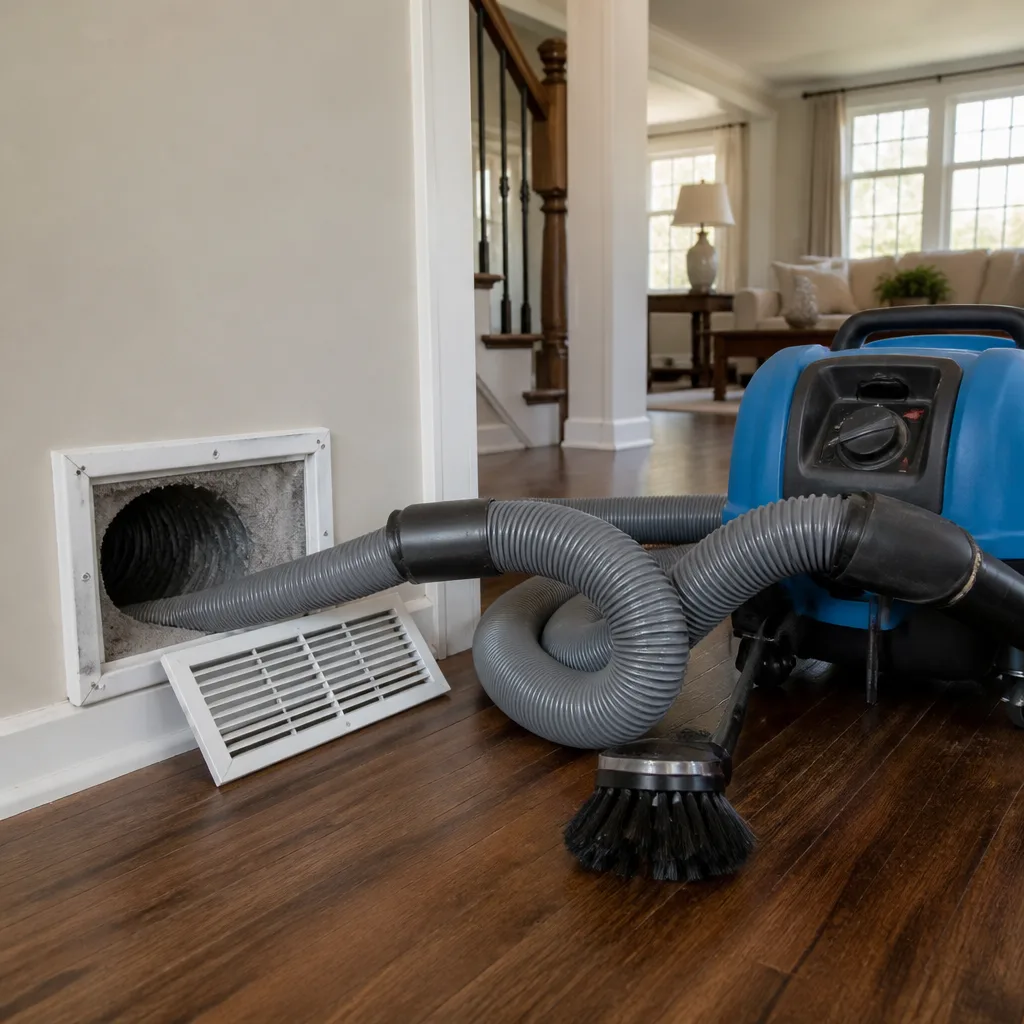 Whole-home duct cleaning
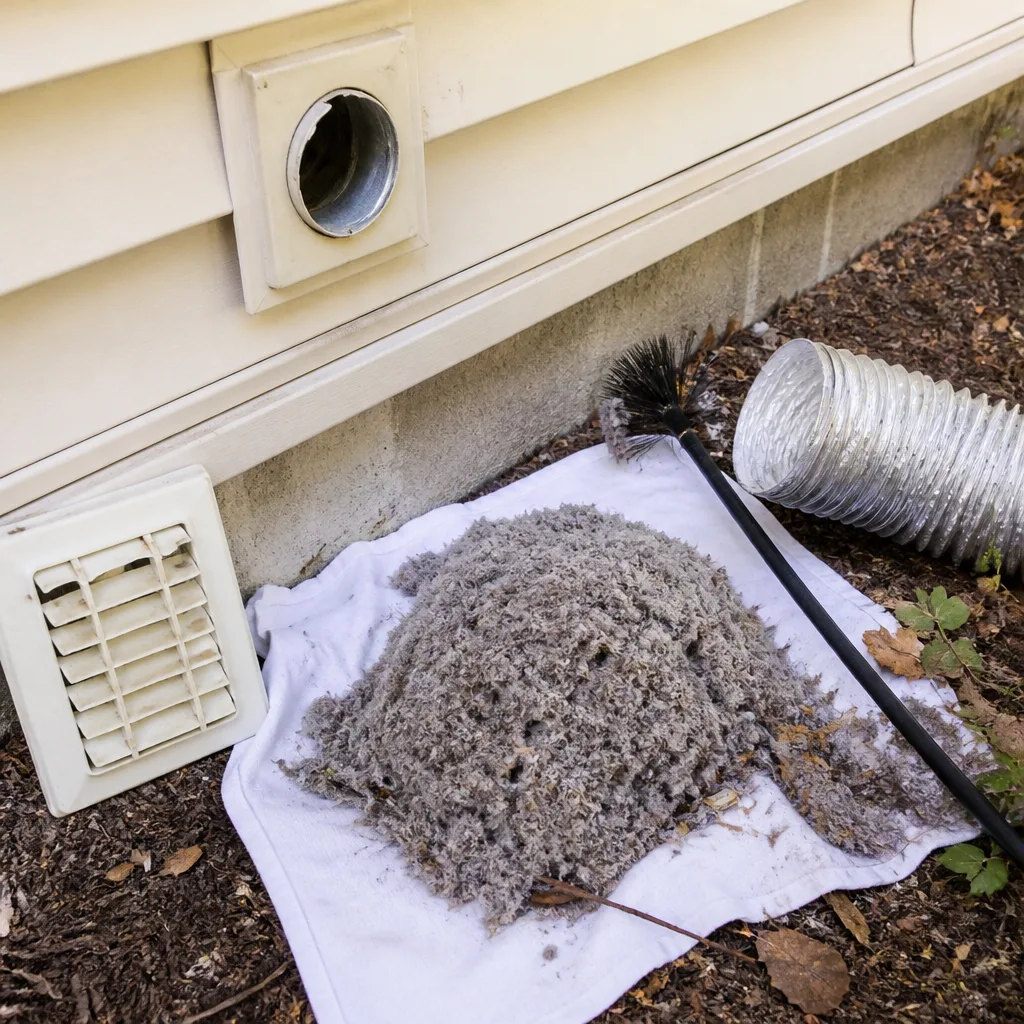 Dryer vent cleaning
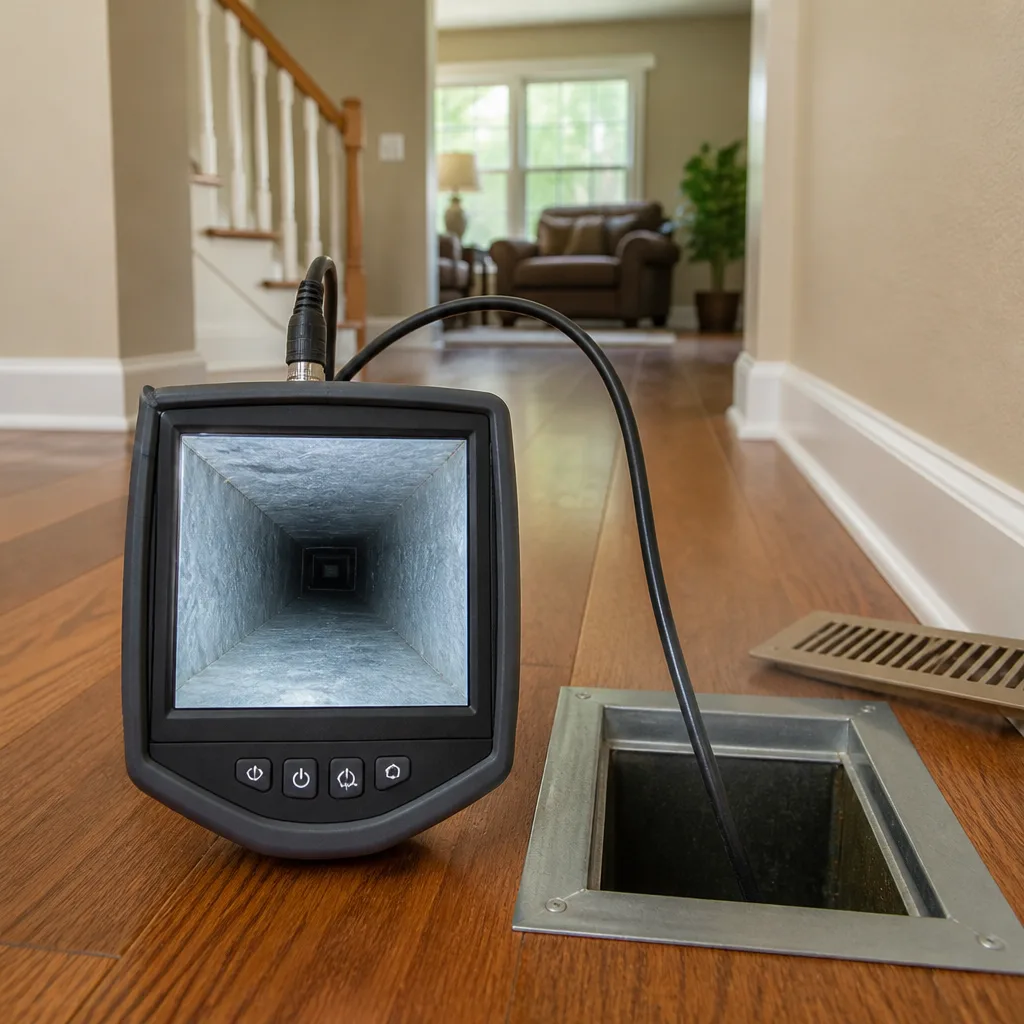 Camera inspection
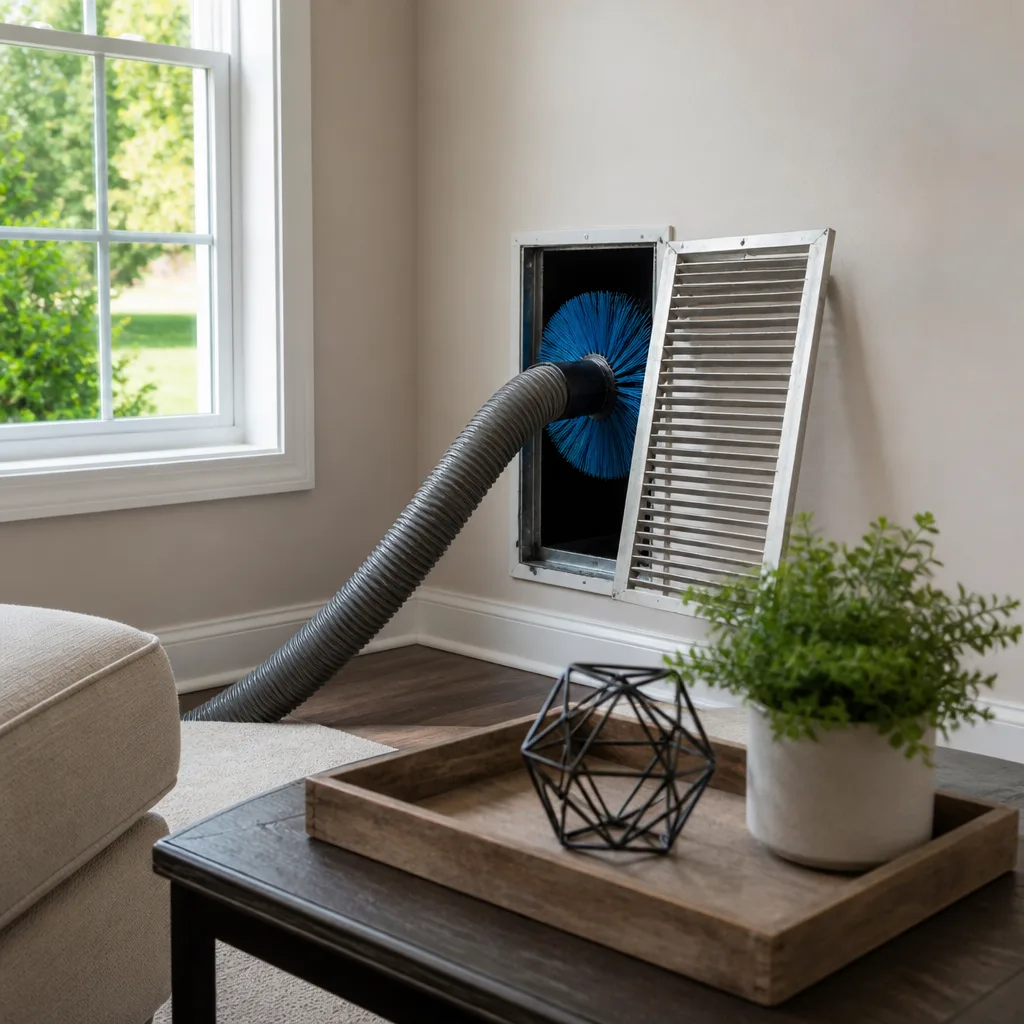 Sanitizing & deodorizing
Whole-system duct and dryer vent check with before-and-after photos - you see exactly what came out of your vents
That "$99 whole-house special" is a bait ad - the real number appears once they are in your hallway, or the "clean" is a shop-vac at the register. We photograph the inside of your ducts before and after instead.
The Complete Guide to Air Duct Cleaning in Borough Park
Most air duct systems in Borough Park weren’t designed. They were fitted. Hundreds of buildings here went up before anyone in the neighborhood heated with forced air, and the ductwork arrived later, threaded through closets, dropped ceilings and wall cavities that were never meant to hold it. That’s why so many Borough Park homeowners clean their vents, see a little dust come out, and still notice the musty smell a month later. The dust you can see was never the problem. This guide maps how ductwork actually runs through Borough Park’s housing stock, where debris piles up inside it, what a full-system clean really covers, and how to know whether the job was done or just performed.
Quick Answer
Air duct cleaning in Borough Park means removing the debris source from the entire system, not wiping down the registers: supply and return runs, the air handler, the blower wheel, the drain pan and the plenum. It typically costs $350 to $900 for most residential systems, priced per system as a flat rate agreed in writing before work begins. The right job is verified with before-and-after airflow or particle readings, not by a technician’s assurance that it looks cleaner.
Styles & brands we work with
- Whole-home duct cleaning
- Dryer vent cleaning
- Camera inspection
- Sanitizing & deodorizing
Table of Contents
- Why Retrofit Ductwork in Borough Park Traps More Debris
- The Anatomy of a Borough Park Duct System
- Source Removal vs. Surface Wiping
- What Oil-to-Gas Conversion Leaves Inside Your Ducts
- What a Full-System Clean Actually Includes
- How to Verify the Job Was Done
- How Often Ducts in Borough Park Really Need Cleaning
- How to Choose a Duct Cleaning Company in Borough Park
Why Retrofit Ductwork in Borough Park Traps More Debris
Borough Park’s housing stock is dominated by pre-war walk-ups, semi-attached brick houses and multi-family buildings from the 1920s through the 1950s. Almost none of them were built with central air. When ducts were added, installers worked around what was already there – structural beams, plumbing stacks, narrow closets – which meant short runs, tight turns and transitions that don’t follow standard sizing. That geometry has a consequence. Debris settles wherever airflow slows and changes direction, and a retrofit system has far more of those points than a house built for ducts from the start.
Two patterns come up again and again in our work around Borough Park:
- Hard 90-degree elbows instead of sweep fittings. Air slams into the corner, drops what it’s carrying, and the pile grows from the inside out. A flexible brush passes over the surface of that pile rather than lifting it.
- Mismatched plenum transitions. Where a modern air handler connects to older rectangular trunking, the size jump creates a dead zone. Dust falls out there and stays.
- Duct runs squeezed against exterior walls and party walls. Condensation forms on cool metal in summer, dust sticks to the moisture, and it bakes into a crust when the heat comes on.
- Return ducts shared with building cavities. In some conversions, return air travels through a wall cavity rather than a proper duct, picking up plaster dust, insulation fibers and whatever else lives in that space.
This is the part a standard brush-and-vac setup physically can’t reach. You need contact with the duct wall at the same time as high-volume negative pressure holding the loosened material in suspension, which is why we run Rotobrush rotary brush systems alongside Nikro HEPA-filtered vacuum equipment. The brush does the loosening; the vacuum has to be strong enough to capture it before it resettles ten feet downstream.
Borough Park’s density adds another layer. Row houses and semi-attached buildings share walls and, sometimes, shared mechanical chases. When one unit’s ducts are heavily fouled, the musty smell has a way of showing up next door. If you manage property in Borough Park, that’s an argument for treating duct cleaning as a building maintenance item rather than a per-unit complaint response.
The Anatomy of a Borough Park Duct System
Before anyone can tell you what a clean costs, they need to know what’s in the system. A thorough Air Duct Cleaning Borough Park visit starts with a walkthrough that maps five components, because each one holds contamination differently.
1. Supply runs and registers
The visible end. A register is the least reliable indicator of overall system condition – it’s the last place dust accumulates and usually the first place a quick crew cleans. In Borough Park, supply runs are often short and heavily angled, which makes them easy to brush and easy to think you’re finished.
2. Return trunks
The return side carries the dirtiest air in the house, and most of the deposited material lives here. A system where only the supplies get cleaned will look clean and go right back to musty within weeks, because the return keeps feeding the whole loop.
3. The plenum
The sheet-metal box where the air handler connects to the trunk lines. Retrofit plenums in Borough Park are frequently undersized or awkwardly shaped, which makes them a collection point for soot, dust and construction grit.
4. The air handler and blower wheel
The blower wheel is a fan of closely spaced blades. When dust coats those blades, airflow drops and the motor works harder to move the same air. This is HVAC cleaning territory, and it’s where a duct-only crew usually stops short. We cover it as part of the system because a clean duct network attached to a caked blower hasn’t solved anything.
5. The drain pan and condensate line
Standing moisture in a drain pan breeds the exact biological growth that produces a musty smell. It’s small, easy to overlook, and often the reason a homeowner’s complaint doesn’t go away after a cleaning.
Source Removal vs. Surface Wiping
The industry standard for duct cleaning is source removal: physically dislodging and extracting the accumulated contaminants from the system so they leave the building. That’s a distinctly different activity from a surface wipe-down, where a technician vacuums the register faces and calls it clean. Both can produce a visibly cleaner vent. Only one changes what’s in your air.
Here’s how the two actually differ in practice:
| Method | What it touches | What happens afterward |
|---|---|---|
| Surface wipe-down | Registers and visible duct openings | Dust in the trunk lines and returns stays where it was; smell returns |
| Source removal | Full supply, return, plenum and air handler under negative pressure | Deposits are extracted from the building; airflow improves |
If a quote is priced per vent, that’s the tell. Source removal is priced per system because the work is defined by the system, not by how many openings happen to be visible. And a very low per-vent number has to come from somewhere: fewer steps, less equipment, no sealing, no verification. We don’t quote by the vent. We give one flat price per system, agreed before we start, with before-and-after photos of your own ducts so you can see exactly what changed.
Surface wiping isn’t meaningless – fresh registers look better and psychologically reset the space. It just shouldn’t be sold as duct cleaning. If someone wipes your vents and tells you the whole system is done, you’ve paid for a cosmetic service.
What Oil-to-Gas Conversion Leaves Inside Your Ducts
Many Borough Park buildings were heated with oil before they had forced-air cooling. When those systems converted to gas or were paired with a new air handler, the existing supply trunking sometimes stayed in place and sometimes was repurposed to carry conditioned air. Either way, the residue didn’t disappear.
Oil combustion produces soot and carbon deposits that behave differently from ordinary household dust. They’re fine, they’re oily, and they tend to bond to sheet metal in a thin film rather than sitting loose on the floor of the duct. Brushing alone smears that film around instead of lifting it. Removing it takes:
- Mechanical agitation with the right brush stiffness to break the film without damaging duct seams or internal liner.
- Sustained negative pressure to capture fine carbon particles before they migrate downstream.
- HEPA filtration at the vacuum so particles don’t exhaust into the living space.
- Optional sanitizing with a professional-grade product, applied only after the surfaces are actually clean.
That last point matters. Sanitizing over a dirty surface seals contamination in place. We use Guardsman-grade treatment products, applied after removal, not instead of it. If a technician offers to fog the ducts without cleaning them first, that’s not remediation, that’s fragrance.
If you’ve noticed a soot or oily smell when the heat kicks on in your Borough Park home, source removal from the supply trunks is worth a conversation before anything else. A system that carries combustion residue also affects what the whole household breathes, so our air duct cleaning work on converted buildings starts with that assessment.
What a Full-System Clean Actually Includes
Ask any duct cleaning company what “full system” means to them before you book. The answer tells you more than the price. Here’s what it means to us, and what you should be able to hold any contractor to:
- A pre-clean walkthrough and airflow check. Every supply and return is located and mapped, and baseline airflow readings are taken at a sample of registers.
- System sealing and negative pressure setup. Registers are sealed and the truck-mounted or portable HEPA vacuum is connected so the whole duct network is under vacuum before agitation begins. Dust that’s loosened has to have somewhere to go.
- Rotary brush agitation of every supply and return run. The brush travels the full length of each run, including elbows and transitions, in both directions.
- Plenum and air handler cleaning. Interior surfaces of the plenum, the blower wheel, the blower housing and the drain pan.
- Debris extraction and inspection. A visual check of each opening with the vacuum still running, plus photos before and after.
- Sealing of any gaps found. This is the step almost everyone skips. Cleaned ducts with leaking seams recontaminate themselves from the space around them. Duct repair and sealing is an in-house service for us, not a referral, because a clean system is only as good as its integrity.
- System sanitizing where needed, and post-clean airflow readings. Same registers, same instrument, so the difference is measurable.
The air handler is the piece most people miss. A clean duct network feeding a blower wheel coated in dust still runs hot, still delivers weak airflow, and still smells. If your system hasn’t been serviced in years and you’ve noticed uneven airflow between rooms, that’s where a full-system quote should include a blower inspection.
How to Verify the Job Was Done
The simplest verification is airflow. Have the technician take a reading at a sample of registers before work starts and again after, with the same instrument, and show you both numbers. A meaningful improvement in supply airflow across the system is hard to fake and easy to record.
Beyond that, ask for these:
- Before-and-after photos of your own ducts. Not stock images, not photos of a different job. Interior shots of a supply run and the plenum, with the camera pointed the same way in both.
- Post-cleaning particle count, if they carry the equipment. A handheld particle counter gives you a number you can compare against outdoor or baseline indoor air. It’s a rough measure, but a rough measure beats a firm promise.
- A view of the debris that left the system. With source removal, the vacuum collects material in a sealed bag or bin. Seeing the volume is verification.
- A written summary of what was cleaned, what was sealed, and what was found. A blower wheel that needs attention, a cracked duct seam, a drain pan holding water – all of that belongs in writing, so you have a record of the system’s condition.
If a company can’t tell you what it will measure and can’t show you photos afterward, the job might well have been done. You just have no way to know. That’s the industry problem, and it’s the reason we price per system and photograph everything.
How Often Ducts in Borough Park Really Need Cleaning
Most homes don’t need annual duct cleaning, and anyone who tells you otherwise is selling a maintenance contract, not a service. The honest answer depends on the building. Older, renovated, densely occupied, or recently converted systems need attention more often than a mechanically clean modern house. In our experience around Borough Park, these factors push up the interval:
- Recent renovation or plasterwork. Construction dust finds its way into every open duct in the building.
- Multiple occupants or multiple units in a mixed-use building.
- Pets, and a lot of them. Borough Park households often have both pets and large families, which is a heavier dust load.
- Any oil-to-gas conversion in the building’s history.
- A heavy year-round cooking culture in the home, which coats kitchen-adjacent return air with grease and smoke residue.
- Water intrusion, or a drain pan that’s been holding standing water.
If you’re not seeing those signals, you can go years. The better triggers to watch are behavioral, not calendar-based: a musty smell when the system starts, allergy symptoms that worsen indoors, uneven airflow between rooms, or visible debris coming out of a register when the fan kicks on. Any one of those is worth a call, regardless of when you last had the ducts cleaned.
What about dryer vents?
Different service, different interval, more important. A dryer vent clogged with lint is a fire risk, and in a building where vent runs cut through tight masonry chases, lint has nowhere to go but out the end – or into the wall cavity. dryer vent cleaning is a fire-safety service, not a lint-trap tidy-up, and we treat it that way. If you can’t remember the last time your dryer vent was cleaned, do that before anything else in this guide.
How to Choose a Duct Cleaning Company in Borough Park
Ask five questions before you book anyone. The answers sort the field quickly.
- Are you pricing per system or per vent? Per-system pricing is the honest structure. Per-vent pricing encourages a crew to skip the parts that matter and add vents you don’t need.
- What’s the full price, in writing, before work starts? Not a coupon price, not a range “depending on what we find.” One flat number per system.
- What equipment will be on site? A professional crew brings a rotary brush system and a HEPA vacuum, not a shop vac. Rotobrush and Nikro are the platforms to listen for; the same equipment commercial and industrial indoor-air contractors rely on.
- Do you repair and seal ducts yourselves, or subcontract it? Seal integrity is part of a clean system. If the answer is “we can refer you,” the check has failed.
- How do you show me the work afterward? Photos of your ducts, before and after, plus airflow readings. If they can’t answer this, they can’t demonstrate anything.
One more thing worth asking: whether they carry remediation-grade capability for mold and contaminant control. Most duct cleaners don’t. We use Abatement Technologies equipment in that role, and we work with Aprilaire and Honeywell air quality systems, which means we can assess whole-home filtration rather than just describe it. If your home already has a media filter or an air purifier tied to the ductwork, that equipment needs to be understood in the context of the system, not cleaned around.
Full-spectrum capability isn’t a pitch, it’s just a shorter list of things to arrange. Cleaning, sealing, HVAC maintenance and air quality in one appointment means one visit and one set of photos to keep.
Common Mistakes to Avoid
- Booking on the coupon price. A promotional number that grows into a much larger invoice once the technician is on site is the industry’s standard bait-and-switch. Insist on one flat price per system, in writing, before the appointment.
- Cleaning the registers only. The registers are the smallest source of contamination in the system. A full clean has to cover supply runs, returns, the plenum, air handler and drain pan, or the visible part isn’t the part that mattered.
- Skipping the return side. The returns carry the dirtiest air. A system with clean supplies and dirty returns re-contaminates itself in a matter of weeks, no matter how good the brush work was.
- Sanitizing over a dirty surface. Fogging contaminated ducts seals dust and biological growth in place. Sanitizing belongs after removal, with a professional-grade product rather than a store-shelf spray.
- Leaving leaking seams alone. Cleaned ducts with gaps in the joints pull dust back in from the space around them. Sealing is part of the job, not an optional add-on.
- Accepting “it looks clean” as verification. Ask for before-and-after photos and airflow readings. In retrofitted Borough Park systems, a clean-looking opening tells you almost nothing about the elbows twenty feet away.
- Forgetting the dryer vent. It’s a separate run and a separate fire-safety issue. Duct cleaning appointments that skip it leave a lint clog in the wall.
See the difference
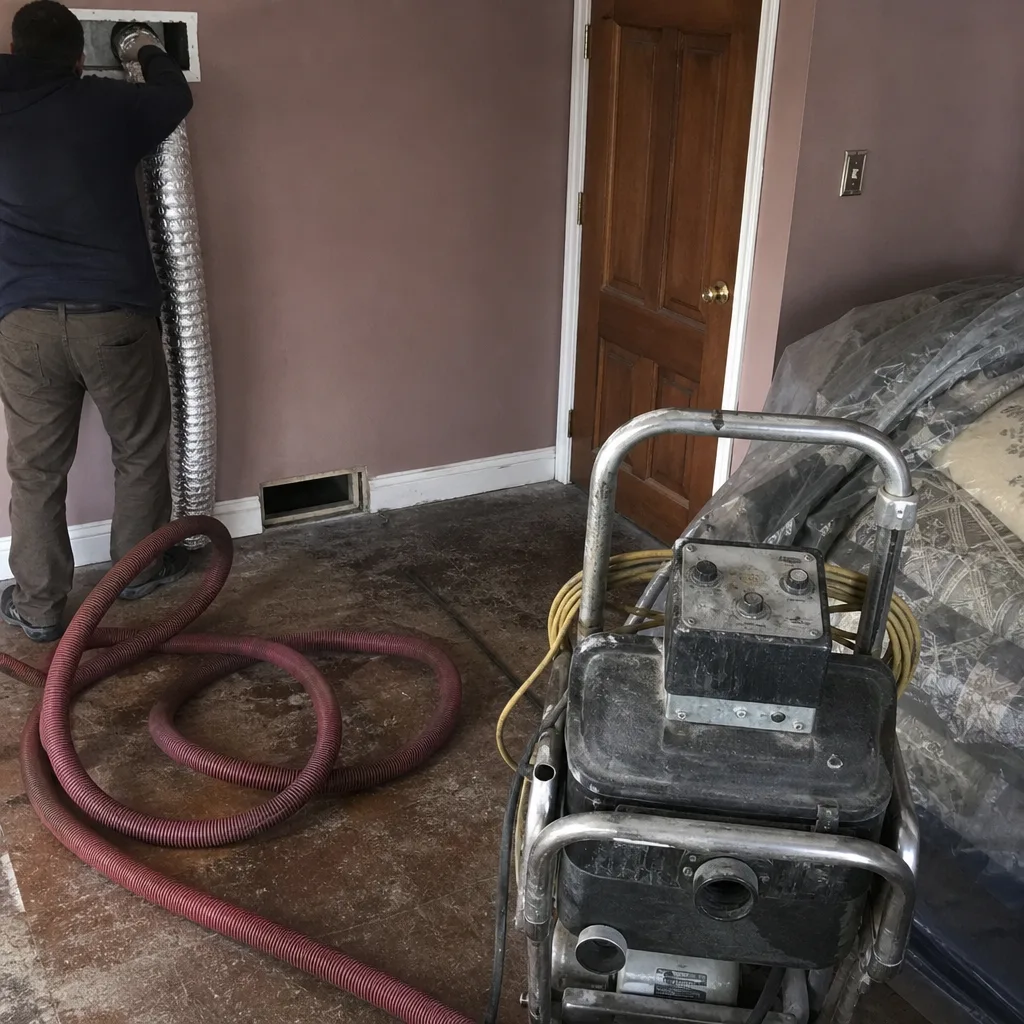 Before
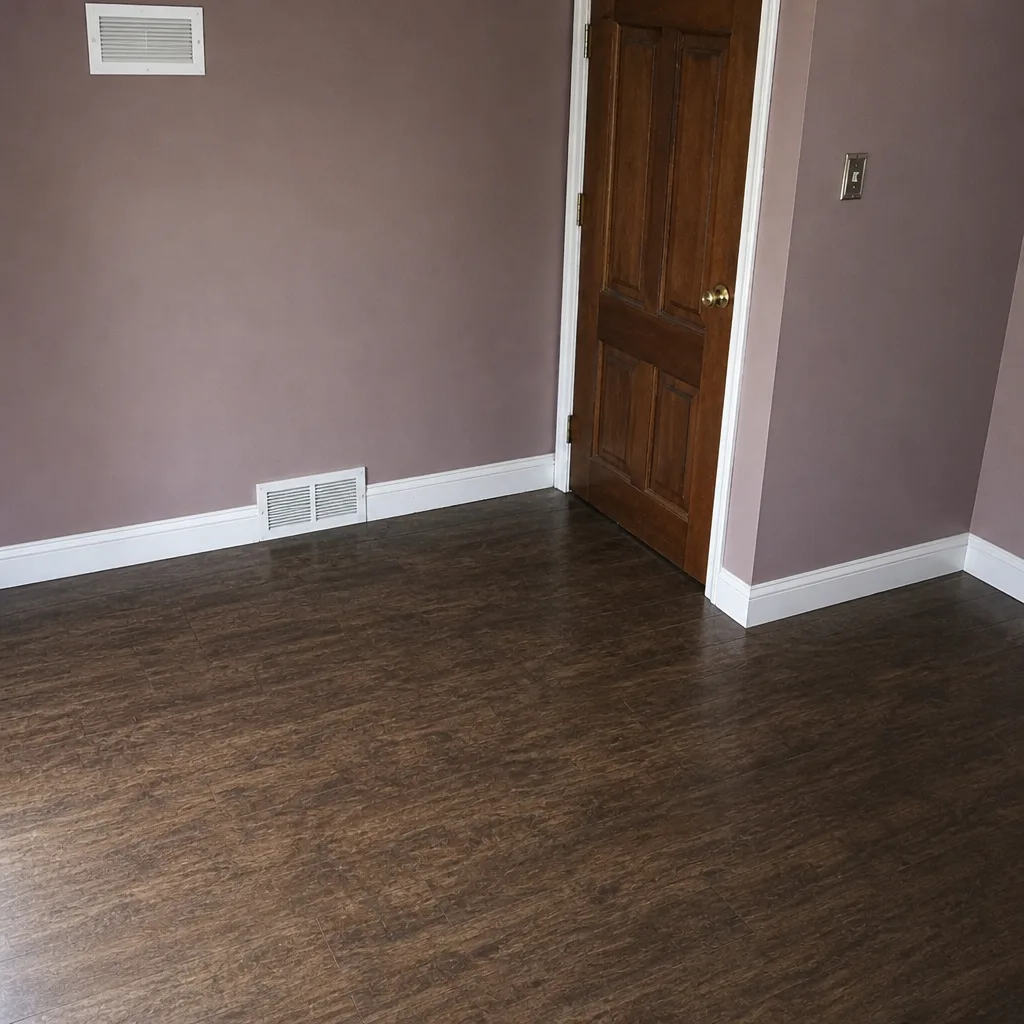 After
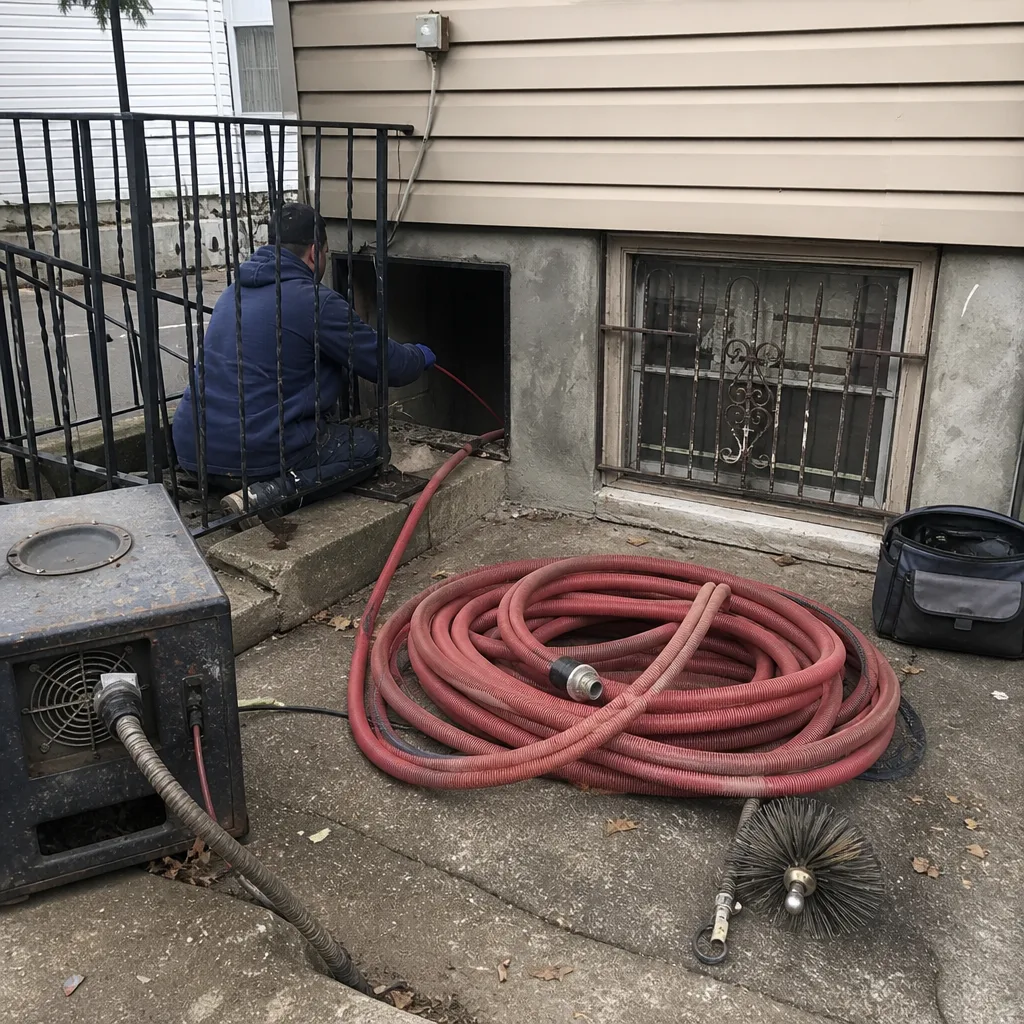 Before
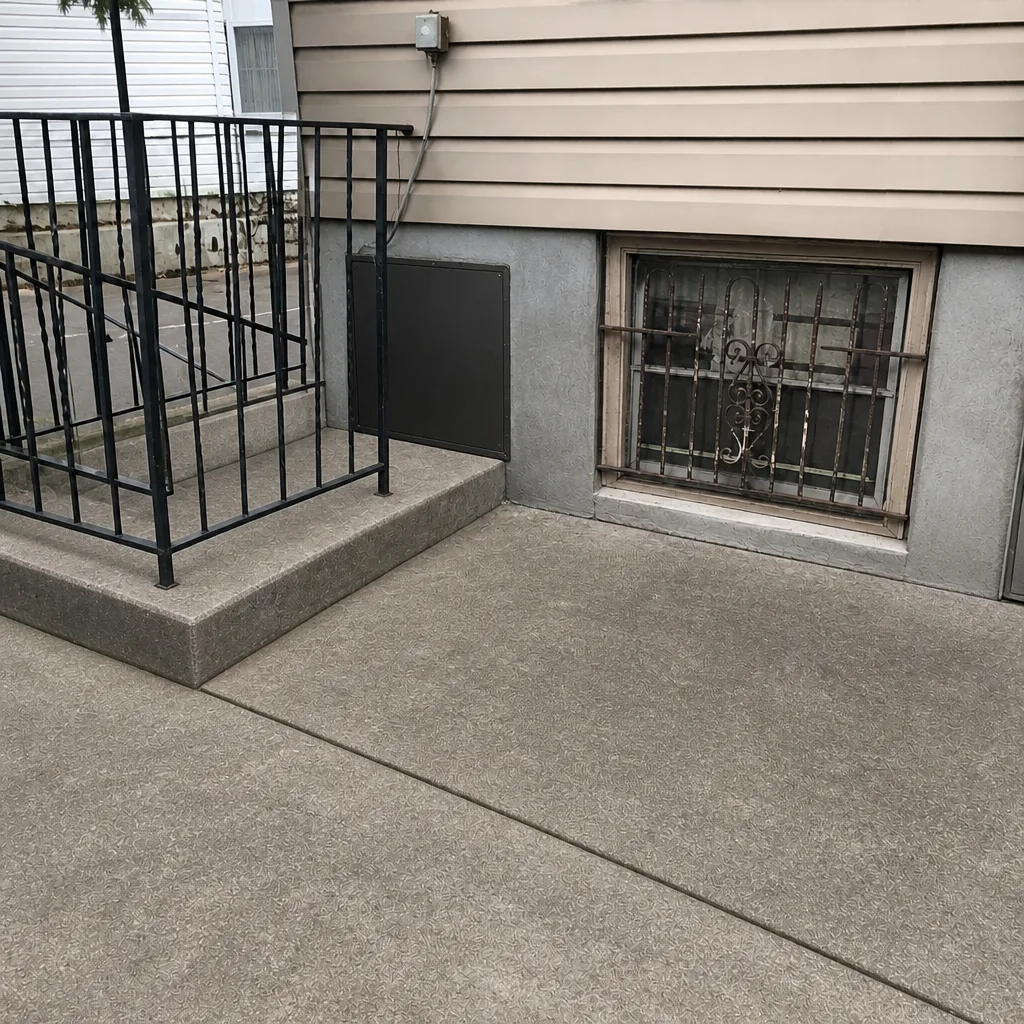 After
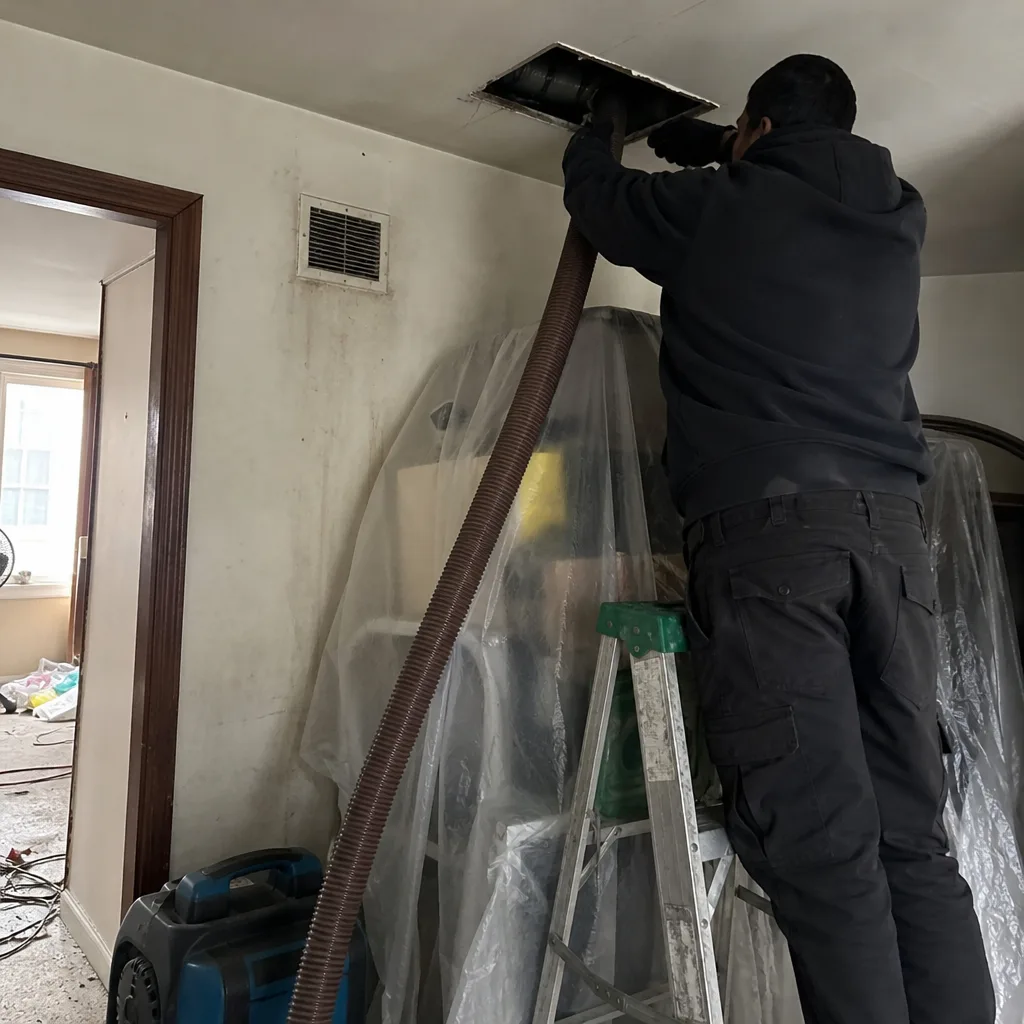 Before
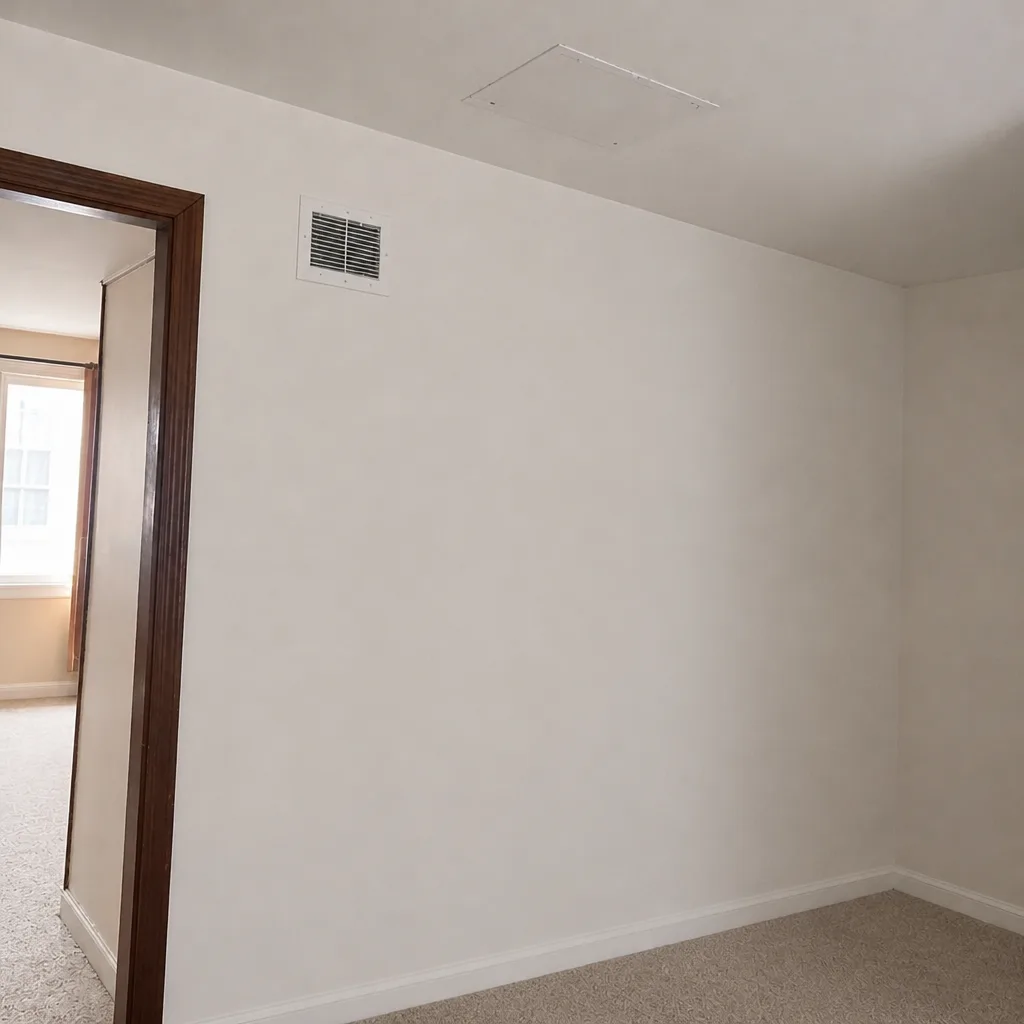 After
When to Call a Professional
Some of this work needs a professional. High-volume extraction, rotary agitation inside duct runs, air handler and blower cleaning, and anything involving the electrical components of the HVAC system are not tasks for a homeowner with a shop vac. Blower wheels and the wiring around them in particular demand a trained hand. If you’ve noticed a musty smell that returns after a cleaning, uneven airflow that a filter change didn’t fix, visible debris blowing from a register, soot residue from an old oil system, or a tenant complaint about air quality in a building you manage, that’s the point to get the system inspected.
Air Duct Cleaning Borough Park offers free estimates in Borough Park. We quote per system, flat, in writing before work begins, and we show before-and-after photos of your own ducts. Our technicians have up to 12 years of experience, and every estimate includes an honest read on what your system actually needs, not a list of extras. Call (855) 337-2070 to book a walkthrough.
Frequently Asked Questions
Most residential systems in Borough Park fall in the $350 to $900 range, quoted as one flat price per system. The range moves with the size and complexity of the ductwork, how many supply and return runs there are, whether the air handler and blower need cleaning, and whether duct sealing is part of the job. Every estimate is free, the price is set in writing before work starts, and the written estimate is the final number. Call (855) 337-2070 for an exact quote.
Cheaper quotes usually mean fewer steps: surface wiping instead of source removal, registers only, no return-side cleaning, no air handler work, no sealing. A low per-vent price also shifts the incentive toward skipping the parts of the system that aren’t visible. The fix is to ask what the quote covers in writing, and to insist on before-and-after photos and airflow readings so the work is verifiable. Call (855) 337-2070 for a per-system quote rather than a per-vent number.
Two ways: airflow readings at a sample of registers taken before and after with the same instrument, and before-and-after photos of your own ducts. Interior shots of a supply run and the plenum, taken from the same position both times, are hard to fake. A particle count is a useful extra if the crew carries the equipment. Call (855) 337-2070 to ask what a job includes in the way of verification.
Most homes can go several years between cleanings. Ducts in older Borough Park buildings need attention more often if the house has been renovated, if the building converted from oil heat, if the household has pets, or if there’s been water intrusion or a drain pan holding moisture. A recurring musty smell, worsening allergy symptoms indoors, or uneven airflow are better triggers than the calendar. Call (855) 337-2070 if any of those sound familiar.
It can, if the source of the contamination is in the ducts and the whole system gets cleaned. Removing accumulated dust, biological growth and combustion residue from supply runs and returns means the system circulates less of it. It won’t replace filtration or fix a humidity problem, which is why we assess the full picture, including any Aprilaire or Honeywell filtration already in place. Call (855) 337-2070 for an assessment.
It should be. Professional duct cleaning relies on a rotary brush system and a HEPA-filtered vacuum, working together so dislodged material is captured rather than stirred into the air. We use Rotobrush rotary brush systems and Nikro HEPA vacuums, plus Abatement Technologies equipment for mold and contaminant work. A shop vac and a hand brush isn’t the same service under a different label. Call (855) 337-2070 to ask what equipment will be on site.
The Bottom Line
The ducts in a Borough Park home are usually retrofitted into buildings that weren’t designed for them, and that geometry is where the debris lives. A real cleaning is source removal across supply, return, plenum, air handler, blower and drain pan, priced per system as one flat number, verified with photos and airflow readings rather than a technician’s word. Sealing matters as much as cleaning. Sanitizing comes after removal, never instead of it. And if a quote is priced per vent, that’s the signal to walk. Call (855) 337-2070 for a free estimate. We answer 24/7. Fast dispatch from 7am to 7pm, Sunday through Friday.
Written by the team at Air Duct Cleaning Borough Park.