
Last updated November 22, 2026
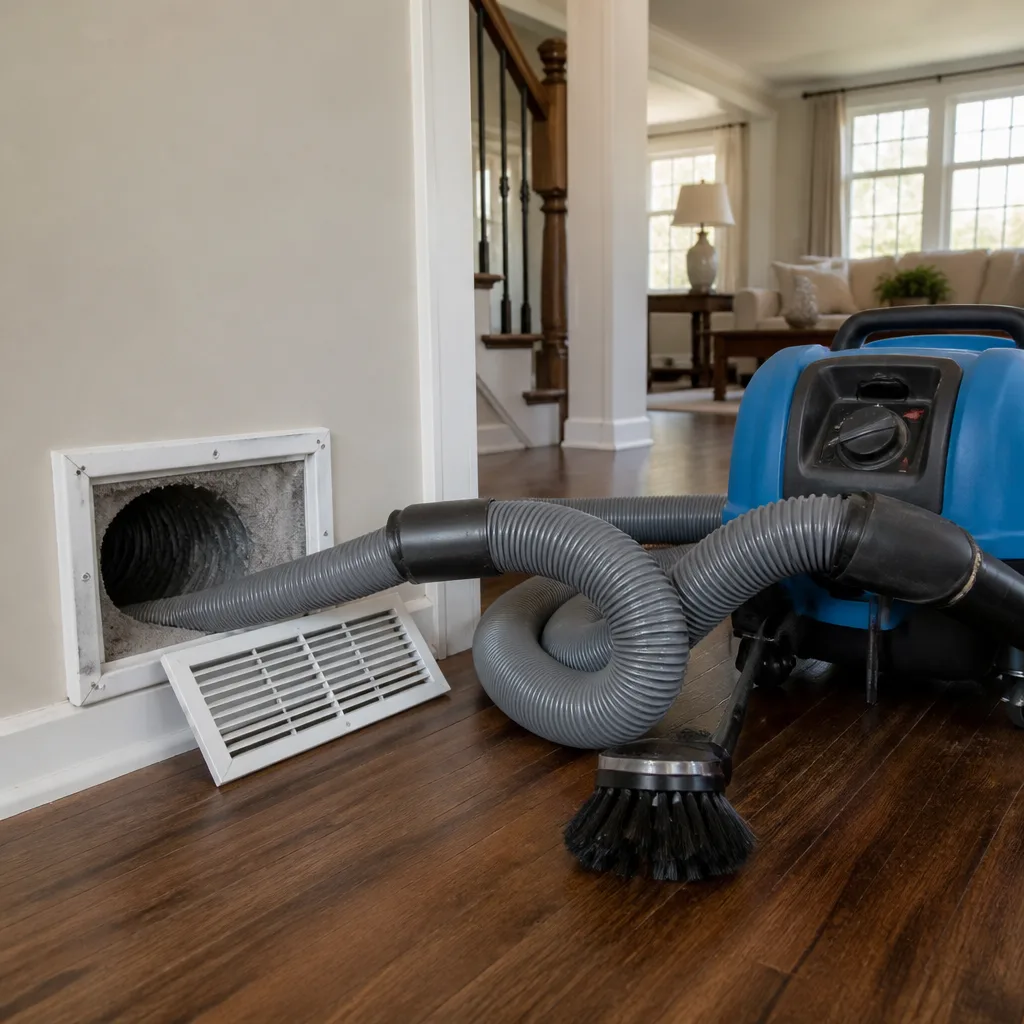 Whole-home duct cleaning
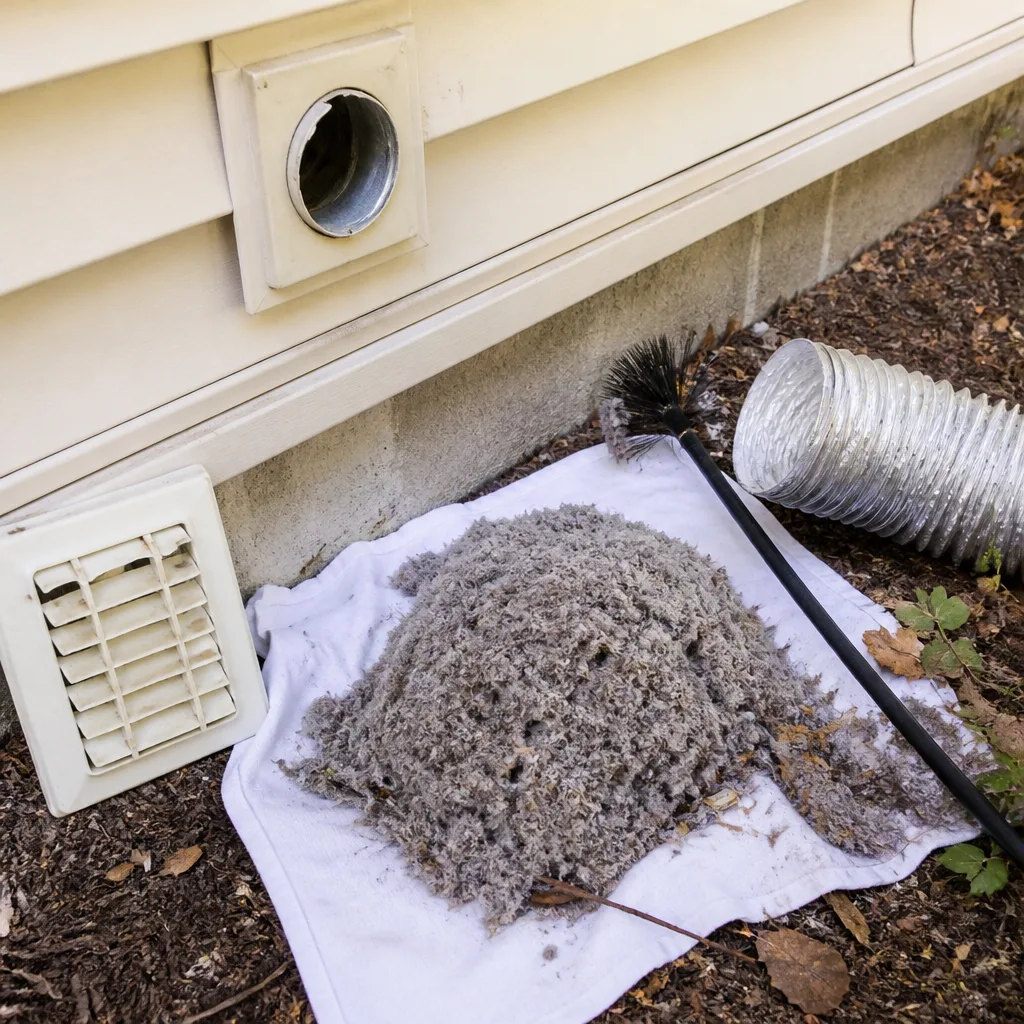 Dryer vent cleaning
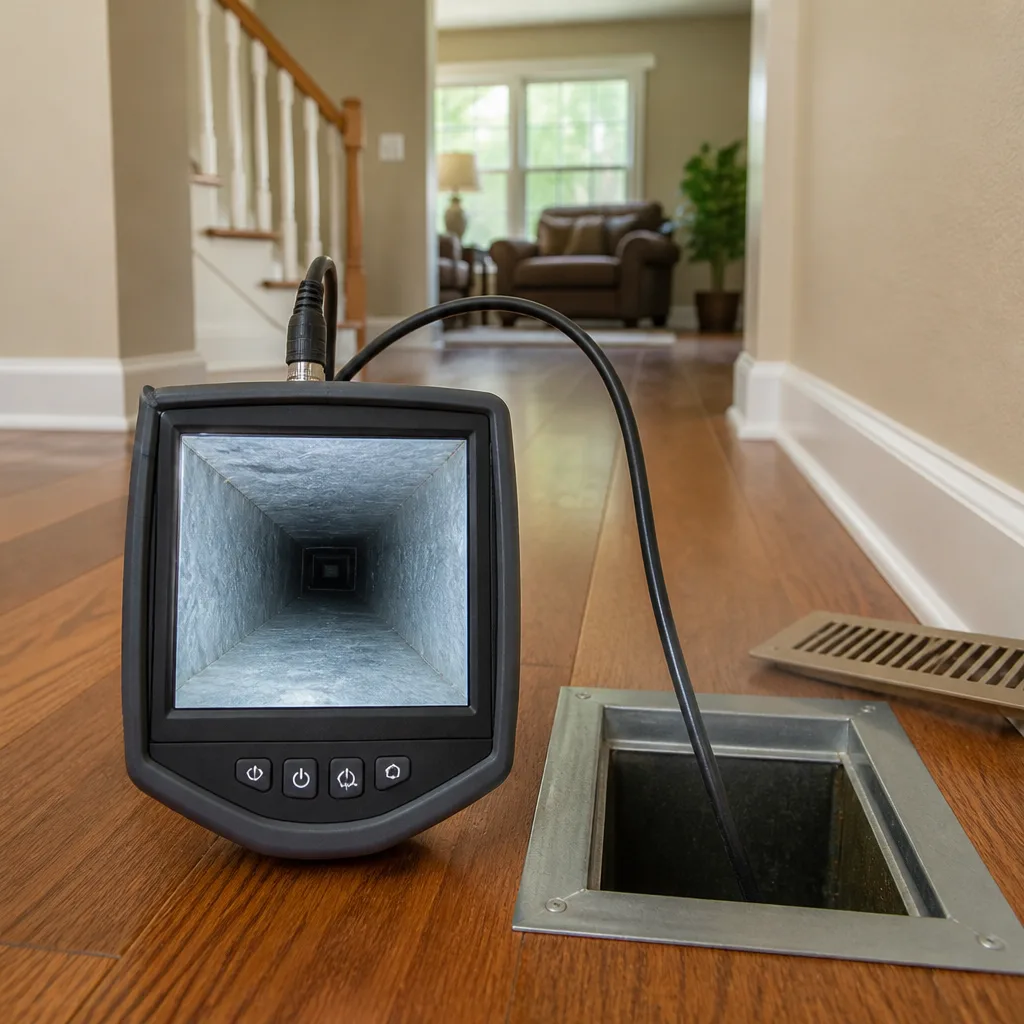 Camera inspection
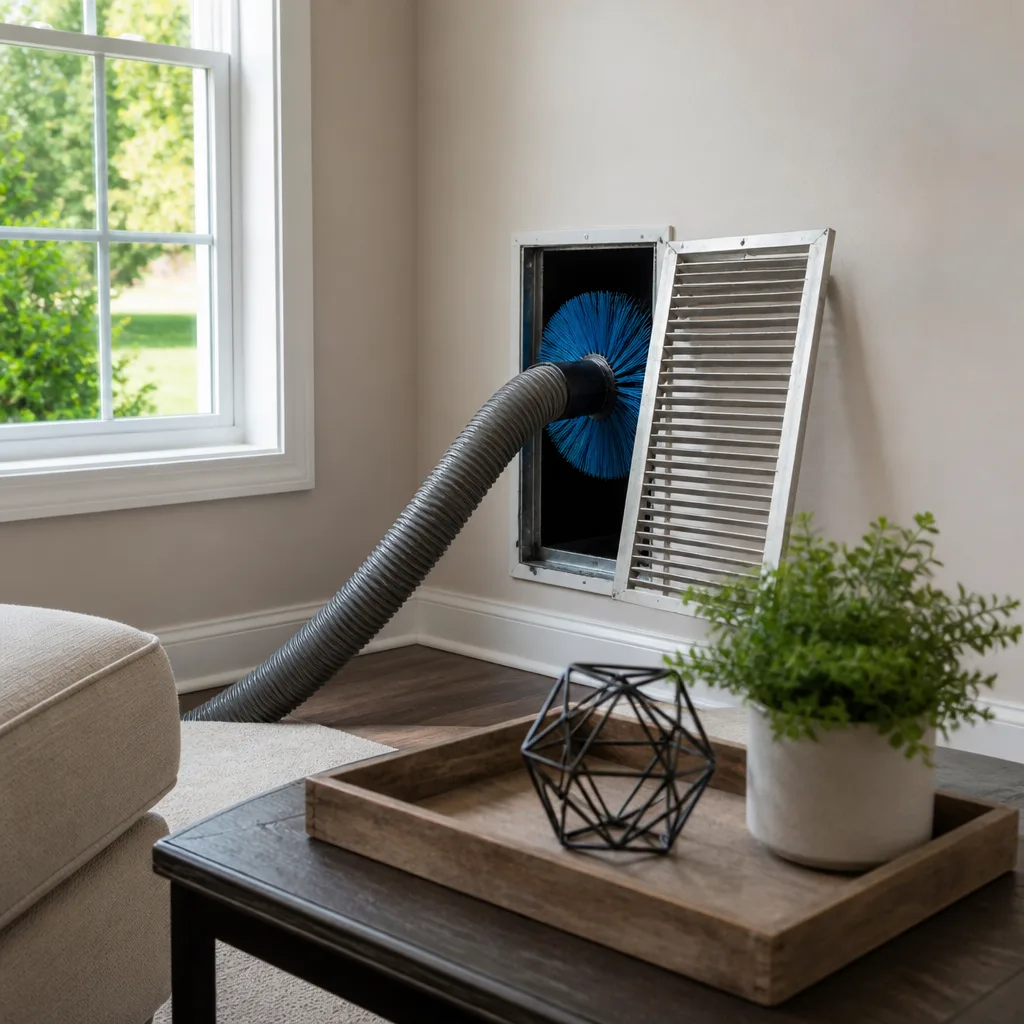 Sanitizing & deodorizing
Whole-system duct and dryer vent check with before-and-after photos - you see exactly what came out of your vents
That "$99 whole-house special" is a bait ad - the real number appears once they are in your hallway, or the "clean" is a shop-vac at the register. We photograph the inside of your ducts before and after instead.
Air Duct Cleaning Maintenance Checklist for Borough Park Homeowners
Change your filter every 90 days. You’ve read it on every HVAC checklist, every utility pamphlet, every product label. And it’s fine advice, for a house with its own furnace and its own return. In a Borough Park apartment building where a shared air handler feeds several units, or a co-op with common return plenums, that filter is also catching debris that started somewhere else, and three months is often too long. The contamination timeline in a densely built neighborhood doesn’t follow the calendar quarter. It follows heating season, humid summers, and the deep-cleaning weeks before Passover. This guide is a room-by-room, season-by-season checklist for Borough Park homeowners and property managers, built around when dust actually builds up here, how to inspect your own registers, and how to tell the difference between a cleaning job and a repair job before you pick up the phone.
Quick Answer
A working maintenance checklist for a Borough Park home should cover four things: filter changes on a schedule tied to your heating and cooling cycle, a visual register inspection you can do yourself every month or two, documentation of odors and dust patterns between professional visits, and a full professional cleaning of ducts, the air handler, and dryer vent on a cycle that fits your building type. Most standalone homes need professional duct cleaning every three to five years. Co-ops and multi-family buildings with shared returns often need it more often, because one unit’s debris reaches several others.
Styles & brands we work with
- Whole-home duct cleaning
- Dryer vent cleaning
- Camera inspection
- Sanitizing & deodorizing
Table of Contents
- Why Generic Duct Maintenance Advice Falls Short in Borough Park
- The Borough Park Seasonal Maintenance Calendar
- How to Inspect Your Own Registers Before Calling Anyone
- Filter Selection by Housing Type: House, Co-op, Multi-Family
- What to Document Between Professional Cleanings
- When a Checklist Item Means Repair or Sealing, Not Just Cleaning
- The Dryer Vent Line Belongs on This Checklist Too
- Common Mistakes to Avoid
- When to Call a Professional
- Frequently Asked Questions
- The Bottom Line
Why Generic Duct Maintenance Advice Falls Short in Borough Park
Borough Park sits in the middle of Brooklyn, dense, built up, and cold in winter and muggy in summer. The heating season here is long enough that a furnace or boiler air handler runs hard for months, pulling air through returns that pass between units and along basement ceilings. Summer humidity climbs high enough that cool duct surfaces in basements and crawl-level chases sweat. That combination, heavy heating-season run time plus humid summers, produces a contamination pattern that a climate-neutral checklist can’t anticipate. The dust-load timeline in a Brooklyn building runs faster than the national averages you’ll find on most HVAC blogs.
Add to that the way Borough Park housing is actually arranged. A sizable share of households live in co-ops and multi-family buildings where a shared air handler or common return feeds more than one unit. When we’re called to an apartment, we often find the register in one unit is the intake that’s been circulating hallway air, laundry air, and cooking odors for the whole floor. Your filter is doing double duty. Your maintenance schedule should account for that.
- Heating season pattern: months of continuous furnace run time load the return side with dust and lint that gets cooked onto duct surfaces.
- Summer humidity pattern: high humidity makes any biofilm or settled moisture-friendly debris in the system more of a problem, not less.
- Shared-air pattern: bugs, lint, and cooking debris from another unit end up at your register.
- High-occupancy pattern: more people per square foot, more dust-load, more turnover, more frequent professional service.
That’s the case for building your checklist around actual triggers, not around the 90-day filter box on the package.
The Borough Park Seasonal Maintenance Calendar
Here’s a practical calendar that matches how a Borough Park home actually breathes. Treat it as a general guide: every building, every air handler, and every household’s dust-load is different. But if you’re looking for a starting point that beats “every 90 days” on the filter and “annual” on everything else, this is it.
Heating season startup (October)
Before the furnace runs daily, replace or clean the filter, walk the house and open the return registers to check for visible dust or debris, and run the system for ten minutes while listening for rattles at registers and the air handler. If something sounds loose, that’s a duct joint or plenum issue, not a filter issue. Note it. Heating season will make it worse.
Pre-Passover deep-clean window (late winter to early spring)
Households in Borough Park that do a thorough pre-Passover deep clean are already moving furniture, pulling apart closets, and emptying kitchen cabinets. It’s the right moment to schedule professional service, because the cleaning is happening anyway and the dust load in the house is at its highest. Book air duct cleaning and, for those who use one, dryer vent cleaning in the same visit before the house is put back together. If your system hasn’t been cleaned in years, the pre-Passover window is the one time it makes the most sense to do the whole system rather than patch it. Hot water heating is common in the neighborhood, but forced-air systems in co-ops and single-family homes still see their heaviest dust-load in these weeks.
Post-summer humidity check (September)
After a Brooklyn summer, any moisture that reached a duct surface has had months to sit. Check for musty odors when the system first kicks on, check the basement or utility closet for standing water near the air handler, and clean or replace the filter after the cooling season. If you’ve been running window units and haven’t used the central system, this is the moment to inspect the ducts before the heating season carries the accumulated dust into every room.
Mid-season register check (January and July)
Monthly visual checks at registers are cheap and useful. See the next section for how to do them.
How to Inspect Your Own Registers Before Calling Anyone
A register check takes about five minutes and tells you more about whether you actually need professional service than any inspection sticker on the system ever will. You’re not opening the ducts. You’re answering three questions: is there visible contamination, is there reduced airflow, and is there an odor. If any of the three are yes, you have a reason to call.
Step-by-step register inspection
- Turn the system off. At the thermostat, not just at the register. You’re not testing airflow here. You’re looking at surfaces.
- Remove a return register grill (usually two screws or a latch). Use a flashlight and look straight into the duct opening. You’re looking for two things: visible dust or lint coating the inside surface, and anything larger than dust (debris, pest droppings, dark streaking).
- Check the supply register the same way. Supply side debris is more commonly biofilm or a visible dust trail escaping from a joint than settled lint.
- Feel for airflow at each supply with the system running. All supplies should feel roughly similar. One noticeably weak register signals a duct problem (a leak, a disconnected run, a closed damper, a crushed section), not just a dirty duct.
- Smell the air as the system first starts after being off for a while. Musty, sour, or chemical smells point to moisture or contamination inside the system.
- Photograph what you see at each register in your phone’s camera roll. Date the photos. That’s your baseline for the next check.
- Clean the register grill (washable grills, warm water and mild soap) but don’t try to reach into the duct with consumer tools. That’s the line where you’re more likely to add debris than remove it.
What counts as a “call someone” finding: visible biofilm, visible debris that’s clearly not household dust, a persistent musty smell, one or more registers with noticeably reduced airflow, or visible dark streaks where a duct joint has opened up. What counts as normal: light dust film on the inside of the duct near the register opening. That’s expected in any home and doesn’t by itself justify a cleaning visit.
Filter Selection by Housing Type: House, Co-op, Multi-Family
Filter selection is where most Borough Park homeowners get it wrong, because they’re buying the same filter for very different systems. A single-family house with its own furnace has one equation. A co-op apartment running a shared air handler has another. A multi-family building with shared returns has a third. Here’s how to think about it.
Standalone house with its own forced-air system
You’re in the simplest case. A pleated filter in the MERV 8 to MERV 11 range covers most households and still lets the system breathe (very high MERV ratings can restrict airflow on older blowers, which costs more than the filtration buys you). Change on a schedule that matches your run time, typically every 60 to 90 days during heavy heating season, and check monthly to see how bad it actually looks. The “when it’s dirty” method works well here because you own the whole airflow.
Co-op apartment with an in-unit air handler
You’ve got a filter at your unit but the air handler may be shared or fed from a common return. That means the filter is catching debris from units around you. Two practical rules: check the filter every 30 days, not 90, and pick a filter that holds its shape under load rather than a cheap fiberglass panel that collapses into the return. If your building’s management handles the air handler filter, ask when it was last changed and keep a note. It becomes useful if you later have a symptom pattern.
Multi-family with shared returns
The filter sees everyone’s debris. Two changes worth making: a higher-capacity pleated filter (MERV 11 to MERV 13 is the sweet spot that still allows reasonable airflow on most systems), and a documented monthly filter check. If the air handler isn’t in your unit, the filter change may be a building responsibility. Your job is to inspect your own registers more often and to note any smell or dust pattern that starts after a neighboring unit changes hands, does construction, or runs a dryer line into a shared chase. Those changes accelerate contamination in ways a general checklist won’t catch.
One more note: if your home has an Aprilaire or Honeywell whole-home air cleaner, the filter is a media cabinet filter, not a standard furnace filter. Use the correct replacement for the cabinet and don’t improvise. We work with Aprilaire and Honeywell systems and can tell you the right schedule and replacement part for your specific setup.
What to Document Between Professional Cleanings
Between professional visits, you’re your own data collector. What you note matters more than most people realize, because it lets a technician diagnose the right system rather than clean the wrong one. Here are the four things to keep track of.
- Odors: Note when they appear (system startup, first cold snap, after rain, after laundry), which room, and what they smell like. Musty, sour, dusty, chemical, and kitchen odors point at different causes: moisture, biofilm, sealant failure, contaminated filter, or cross-unit cooking.
- Visible dust trails: Photograph any place where dust builds against a wall, on furniture, or around a supply register. A dust trail that appears only near one supply and not others signals a leak at that joint, not a whole-system problem.
- Allergy symptom patterns by room: If a household member reacts more in one room than another, note which. Room-specific symptoms point to a contaminated supply in that room, a supply that’s routed through a wet space, or a register that’s blowing directly across a bed or a desk.
- Airflow changes: Note any register that has become noticeably weaker over time, and note when. Sudden weakening suggests a duct disconnect or damper problem. Gradual weakening suggests a build-up.
Keep these notes in a single place, dated. When you call a professional, those notes are worth more than any inspection report, because they tell the technician where the problem started. We’ve seen homes where a persistent bedroom odor turned out to be a duct joint that had opened into a wall cavity. The household’s notes were what pointed to it.
When a Checklist Item Means Repair or Sealing, Not Just Cleaning
The single most common mistake we see is treating a duct problem as a duct cleaning problem. Cleaning removes what’s inside a duct. It does not fix a duct that’s leaking, disconnected, or crushed. Here’s how to sort a routine item from a real repair signal.
Signs a cleaning visit alone won’t solve it
- Persistent dust trails after cleaning. If dust reappears near the same supply within weeks, the joint is leaking and pulling air from an unconditioned space.
- Room-by-room temperature swings. Uneven cooling or heating that doesn’t improve with cleaning typically means a duct is disconnected, kinked, or has a failed joint.
- A musty smell that returns. If a musty smell goes away after cleaning and returns within a month, the source is moisture somewhere the cleaning didn’t reach, or a duct running through a damp cavity. Sealing the duct and addressing the source is the fix.
- Whistling or rattling at a register. That’s a pressure or a joint problem, not a dirt problem. Cleaning won’t quiet it. Sealing or re-hanging the duct will.
- Visible gaps at plenum connections or flex runs. Flex duct that’s pulled at a joint or crushed against framing is a repair, and it needs to be sealed before another cleaning is worthwhile.
This is why we do air duct cleaning as part of a wider picture rather than as an end in itself. Duct repair and sealing is our in-house service, so we’re not sending you elsewhere when the checklist says “leak” instead of “dirt.” Cleaning, repairing, sealing, and sanitizing the same system in one pass closes the loop. Cleaning a leaking duct and calling it done is like mopping under a leaky pipe.
The Dryer Vent Line Belongs on This Checklist Too
The dryer vent is a duct, it collects lint on the same schedule as the rest of your system, and in a Borough Park building with stacked units and long vent runs, it’s the one duct that’s also a fire-safety line. The U.S. Fire Administration attributes thousands of home fires a year to dryer vents, and lint build-up is the leading cause. That’s why dryer vent cleaning is on this checklist and not treated as a separate concern.
How to tell when your dryer vent needs attention
- Drying time has crept up. Loads that used to take one cycle now take two. That’s a restriction in the vent, not in the dryer.
- The dryer feels hot to the touch or the laundry is hot at the end of the cycle. Heat that should be exhausting through the vent is backing up into the unit.
- The outside vent flap doesn’t open fully when the dryer runs. Go outside and watch it while someone runs the dryer.
- You see lint accumulation around the dryer or at the wall vent behind it. That’s already escaping lint.
- You’ve never had the vent cleaned and the run is long or has tight bends. Long runs with elbows collect lint faster, and a flexible corrugated run collects it faster still.
If any of the first four apply, stop using the dryer until the vent is cleaned. Dryer vent cleaning is a fire-safety service, not a nice-to-have, and it’s worth scheduling alongside your duct service so the whole system gets one visit.
HVAC Cleaning Belongs on the Same Schedule
If you clean your ducts but ignore the air handler and coil, you’ve cleaned the house and left the source. The HVAC unit itself, the cabinet, blower, coil, and drain pan is where the dust you’re seeing at your registers has usually picked up its moisture and its biofilm. In a humid Brooklyn summer, that coil and pan can be a breeding surface for contamination you then breathe through every register in the house.
HVAC cleaning on the same cycle as the ducts is what actually closes the loop. When we’re onsite, we inspect the cabinet, coil, blower, and drain pan, clean the coil and blower, clear the drain line, and check the cabinet for seal integrity. Cleaning the ducts and skipping the air handler is why some households clean and still have the same smell within a season.
See the difference
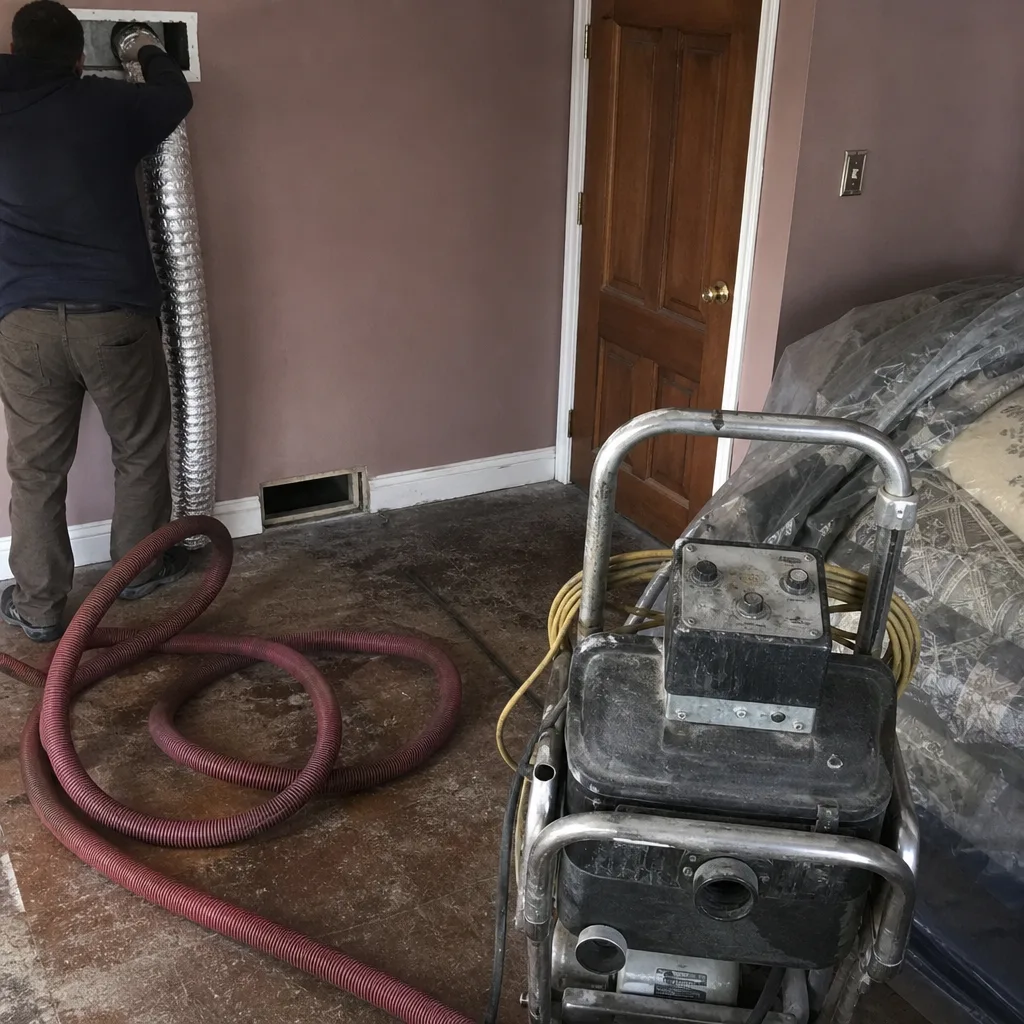 Before
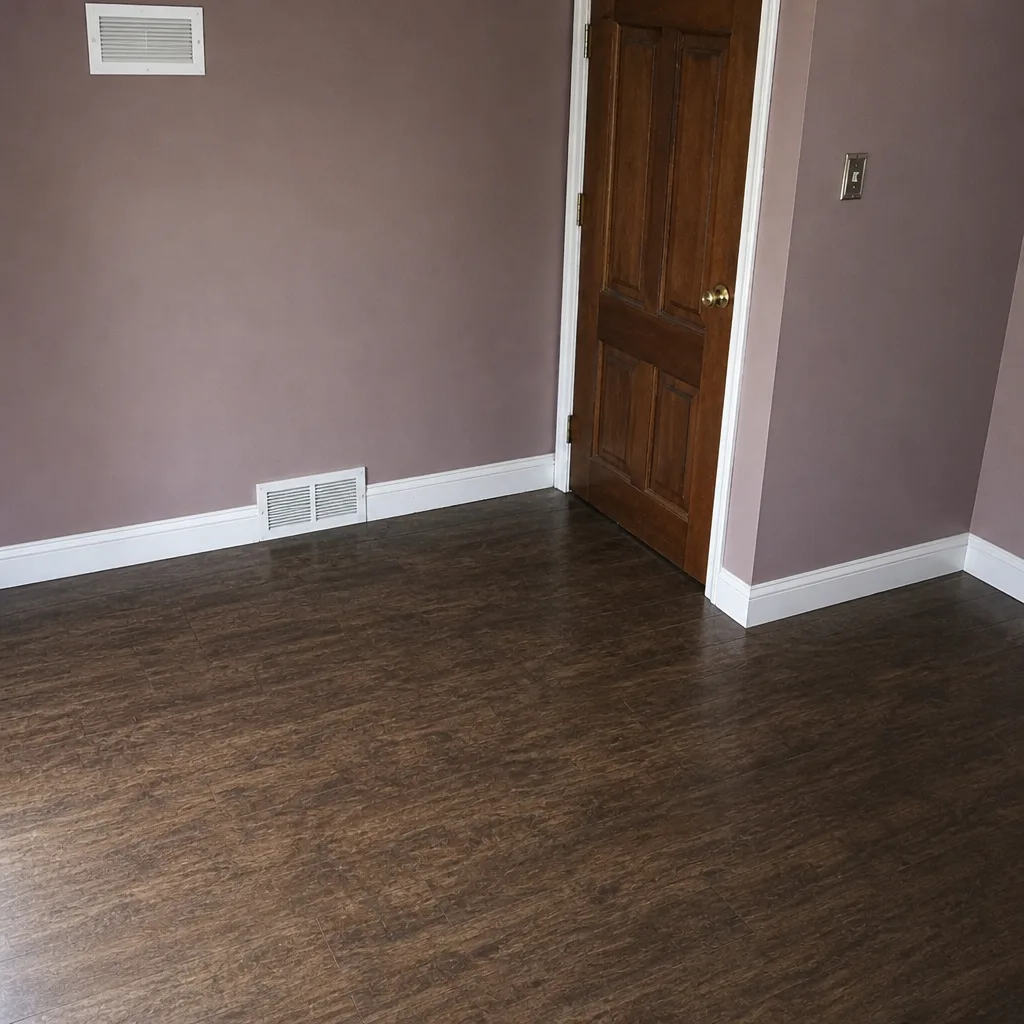 After
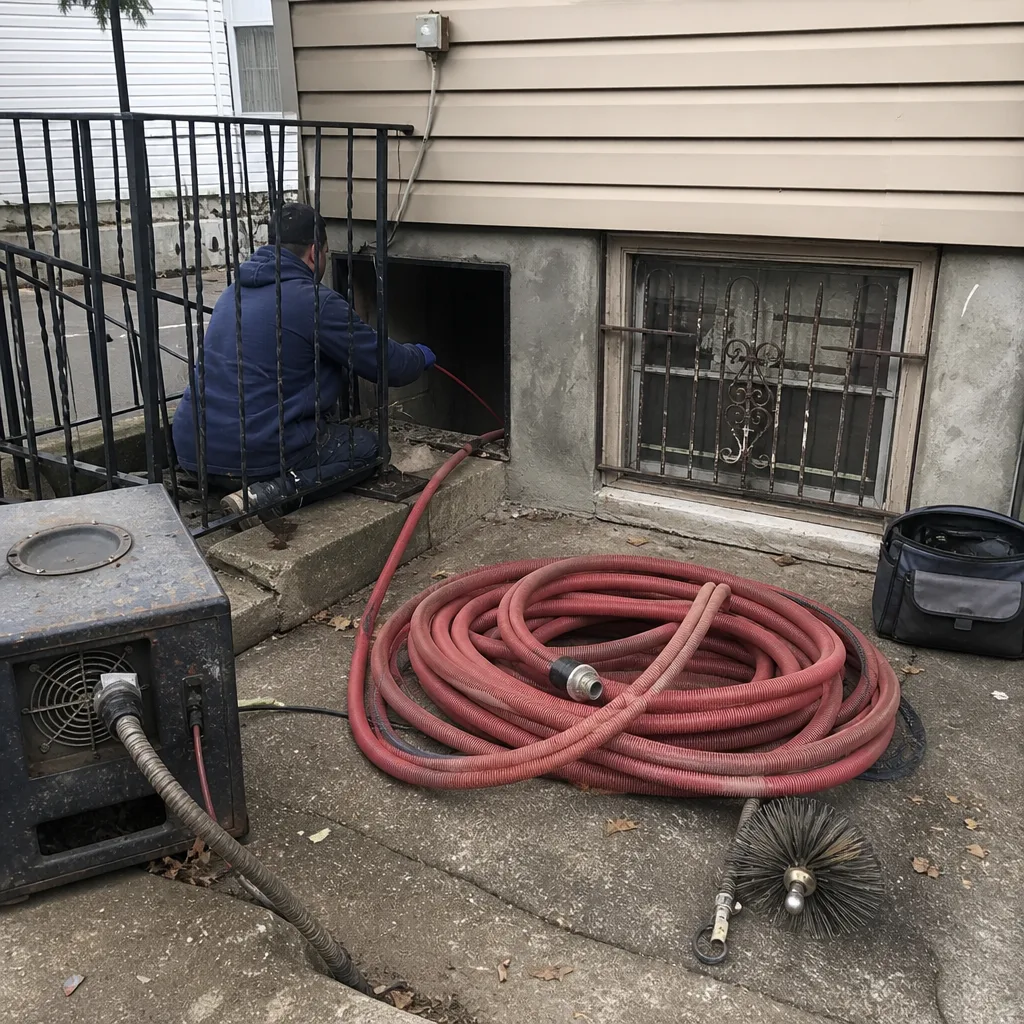 Before
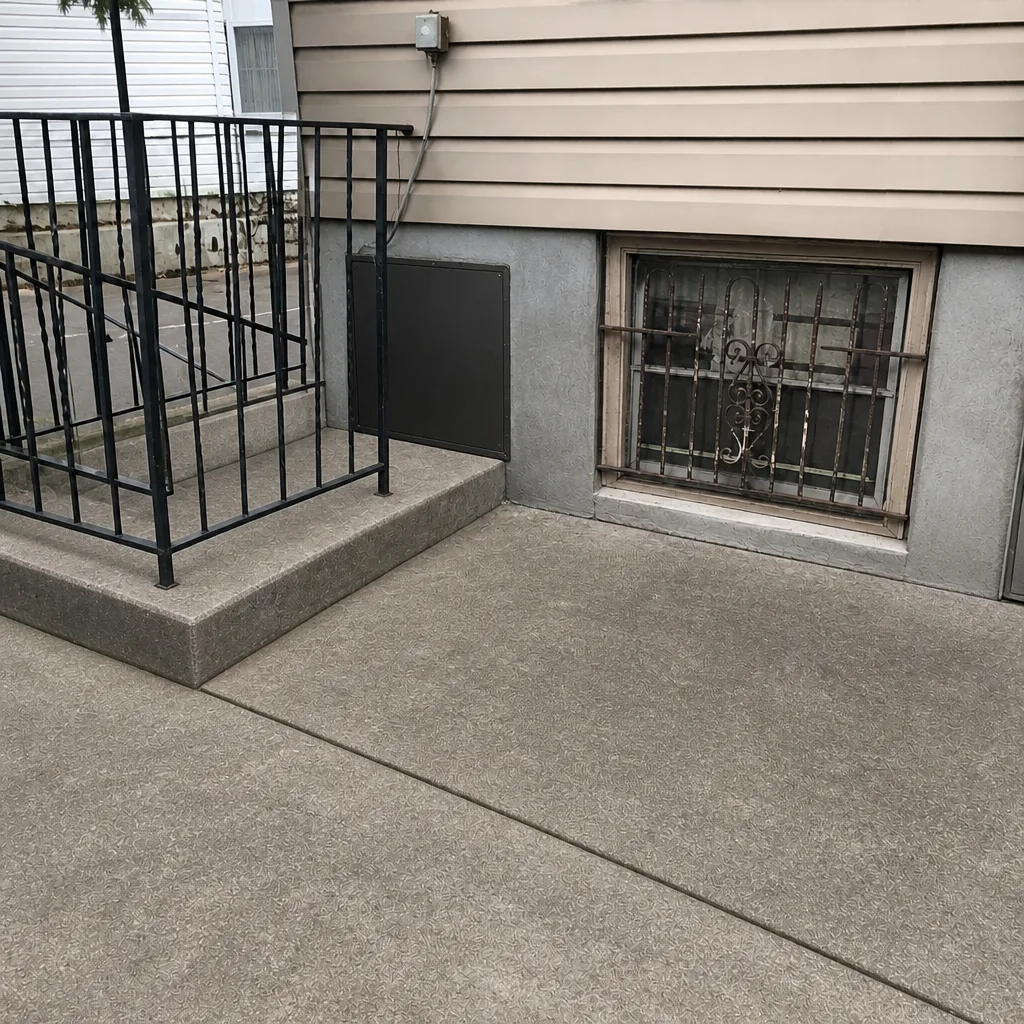 After
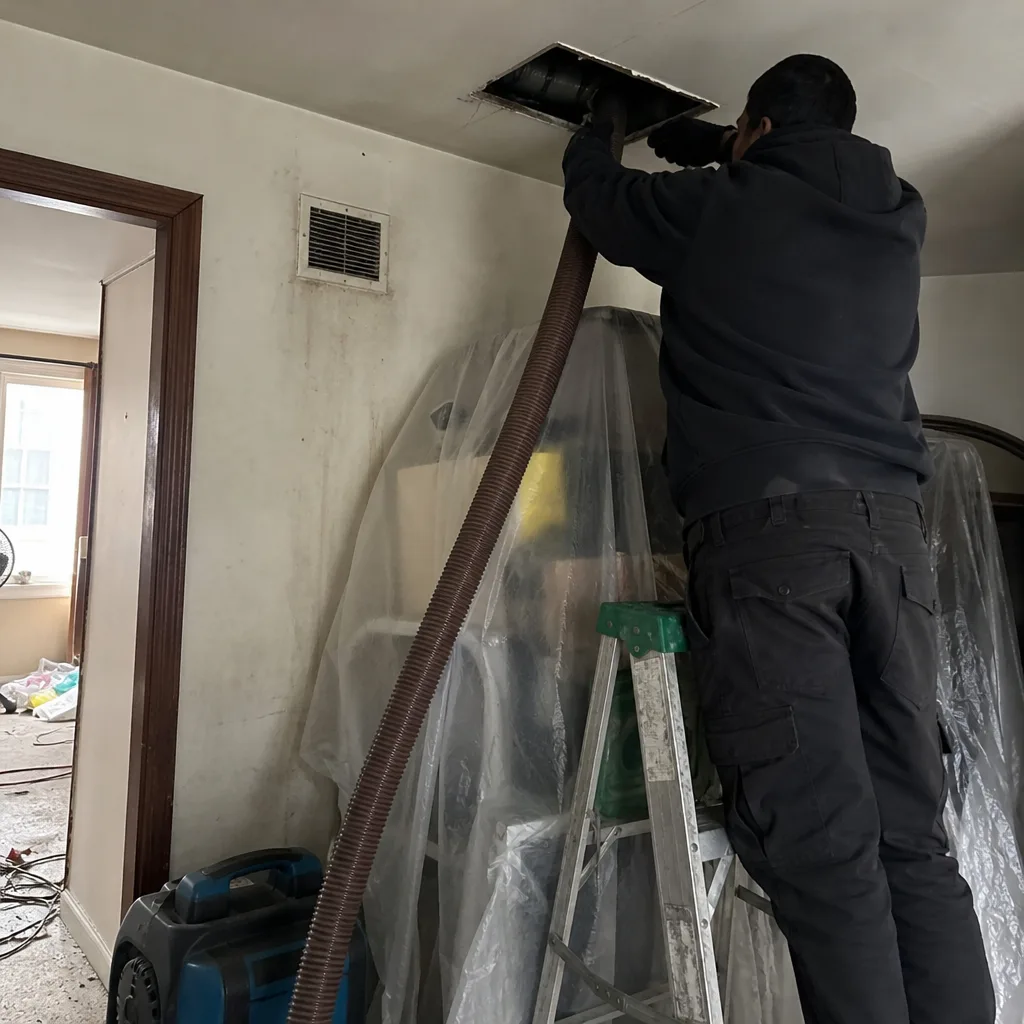 Before
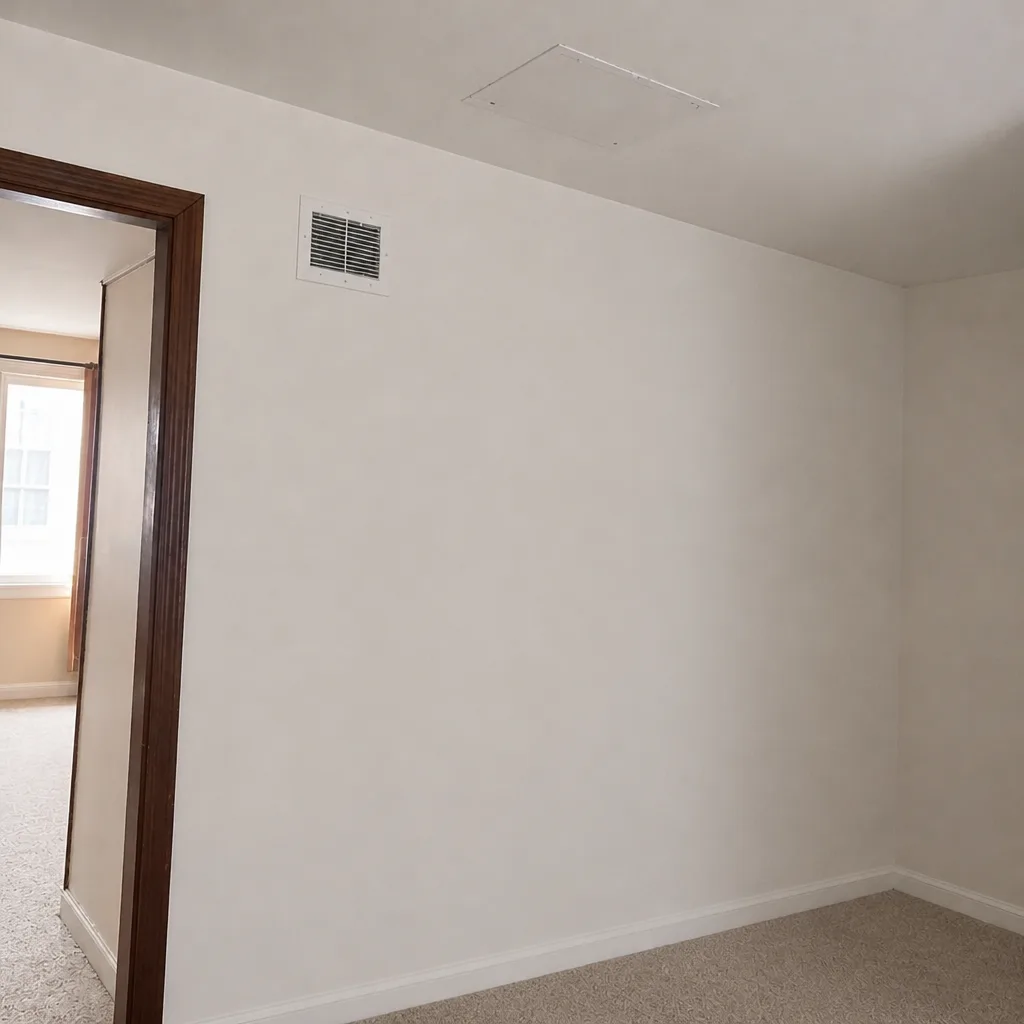 After
Common Mistakes to Avoid
- Trusting the 90-day filter rule in a shared-air building. If a co-op or multi-family air handler feeds your unit alongside others, 90 days is too long. Check monthly and change on condition.
- Cleaning the ducts and skipping the air handler. The cabinet, coil, and drain pan hold the moisture and biofilm the ducts don’t. Cleaning one without the other leaves the source in place.
- Calling for a cleaning when the checklist says “leak.” A dust trail that returns after cleaning, or a register that has lost airflow, is a sealing or repair job. A cleaning pass on a leaking duct does nothing that lasts.
- Reaching into the ducts yourself with consumer tools. Consumer shop vacuums and flexible wands push more debris into the system than they pull out, and they don’t reach the plenum. Home inspection by flashlight is where the do-it-yourself part ends.
- Skipping the pre-Passover booking window and calling in late spring. The deep-clean weeks are when the house dust load is highest in Borough Park. If you schedule the cleaning after the house is put back together, you’ve just paid to clean ducts that will be reseeded by the moving and cleaning dust.
- Forgetting the dryer vent because the ducts look clean. Drying time creeping up and a warm dryer are the signs. In stacked buildings with long vent runs, that’s the more urgent line.
- Cleaning once and never again. Ducts aren’t a one-time fix. Three to five years is the working interval for a standalone home; co-ops and shared-return buildings need a shorter cycle.
When to Call a Professional
Some checklist items are yours to handle. Others shouldn’t be. Call us when you find visible biofilm or debris inside a return, a persistent odor you can’t trace, more than one register with noticeably reduced airflow, dust trails that reappear within weeks of your last cleaning, a dryer that’s taking two cycles to dry, or a system that’s never had a professional cleaning and you can’t remember the last time. Also call when you’re in a shared-air building and a neighboring unit has done construction or moved out: turnover is the moment dust load spikes in the common return. Professional equipment makes the difference. We use Rotobrush rotary brush systems and Nikro HEPA-filtered vacuums, the same platforms commercial and industrial IAQ contractors rely on, not consumer tools. We also use Abatement Technologies and Guardsman-grade products when sanitizing is on the table. Air Duct Cleaning Borough Park offers free estimates in Borough Park. Call Air Duct Cleaning Borough Park at (855) 337-2070.
Frequently Asked Questions
For a standalone home with its own system, every three to five years is a reasonable working interval. For a co-op, apartment, or multi-family building with a shared return, closer to every two to three years, because the filter and the ducts are handling debris from several units. If you’ve never had it done and can’t remember the last time, that alone is the answer. Call (855) 337-2070 for an exact quote. Estimates are free.
Pricing depends on the number of registers, the system type, and whether repair or sanitizing is included. The estimate is free, and the price is set per job by the written estimate, not by a per-vent formula. We work on one flat price per system agreed before work starts, and you see before-and-after photos of your own ducts. Call (855) 337-2070 for an exact quote. Estimates are free.
Cheaper quotes usually mean a shorter visit, low-powered equipment, and no inspection of the air handler, the coil, or the duct seals. If your ducts are leaking or your coil is contaminated, a low-priced cleaning pass leaves the source in place. We see this often in Borough Park apartments where a shared return was cleaned but the leaking joint in the neighboring cavity wasn’t. Our visits include the full system because that’s what actually changes the air you breathe. Call (855) 337-2070 for an exact quote.
Ask for photos before and during the work, and be present for the inspection step. You should see the register grills removed, the plenum opened, and the vacuum connected, and you should get photos of the same register before and after. We photograph our work as a standard part of every job. Call (855) 337-2070 for an exact quote.
Yes. In a shared-air building, your filter is catching debris from other units. Monthly checks let you catch a heavy load before it restricts airflow. Pick a pleated filter in the MERV 11 to MERV 13 range if your system can handle it, and confirm with the building what schedule they use on the shared air handler.
It’s the practical window for Borough Park households. The house is being emptied and cleaned anyway, dust load is at its seasonal high, and scheduling the duct and dryer vent cleaning in that period means the duct work isn’t reseeded by the house cleaning that follows. It’s not a hard requirement. It’s just the timetable that matches the way households here live.
If you have allergy symptoms that pattern by room, a musty smell, or a family member with respiratory sensitivity, an air quality and sanitizing assessment goes beyond cleaning. We work with Aprilaire and Honeywell whole-home air quality systems and can assess whether a whole-home air cleaner or a sanitizing pass fits your system. Call (855) 337-2070 for an exact quote.
The Bottom Line
The right checklist for a Borough Park home isn’t a copy of the one on the furnace filter box. It’s tied to the heating season, the summer humidity, the pre-Passover deep-clean window, and the way shared air flows in co-ops and multi-family buildings. Filter monthly in shared-air setups. Inspect your registers yourself every few weeks. Document odors, dust trails, and symptom patterns by room. Clean the air handler on the same cycle as the ducts. Put the dryer vent on the same schedule. And when the checklist says “leak” instead of “dirt,” treat it as repair and sealing, not just cleaning. Do those four things and you’re running the system on the calendar it actually needs, not the one you were told to follow.
Call (855) 337-2070 for a free estimate. We answer 24/7. Fast dispatch from 7am to 7pm, Sunday through Friday. One visit can cover air duct cleaning, dryer vent cleaning, HVAC cleaning, duct repair and sealing, and air quality and sanitizing. Our technicians have up to 12 years of experience, and the estimate sets the price before any work begins.
Written by the team at Air Duct Cleaning Borough Park.