
Last updated November 22, 2026
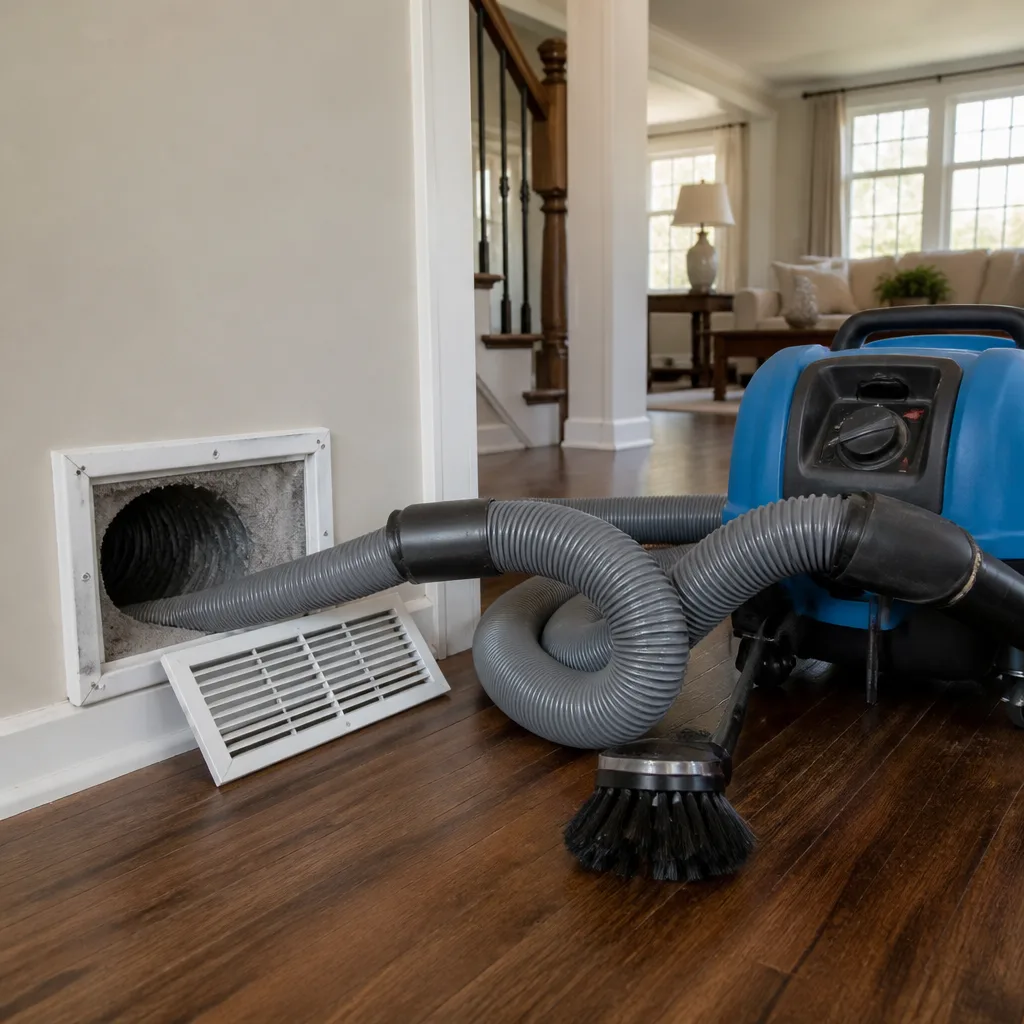 Whole-home duct cleaning
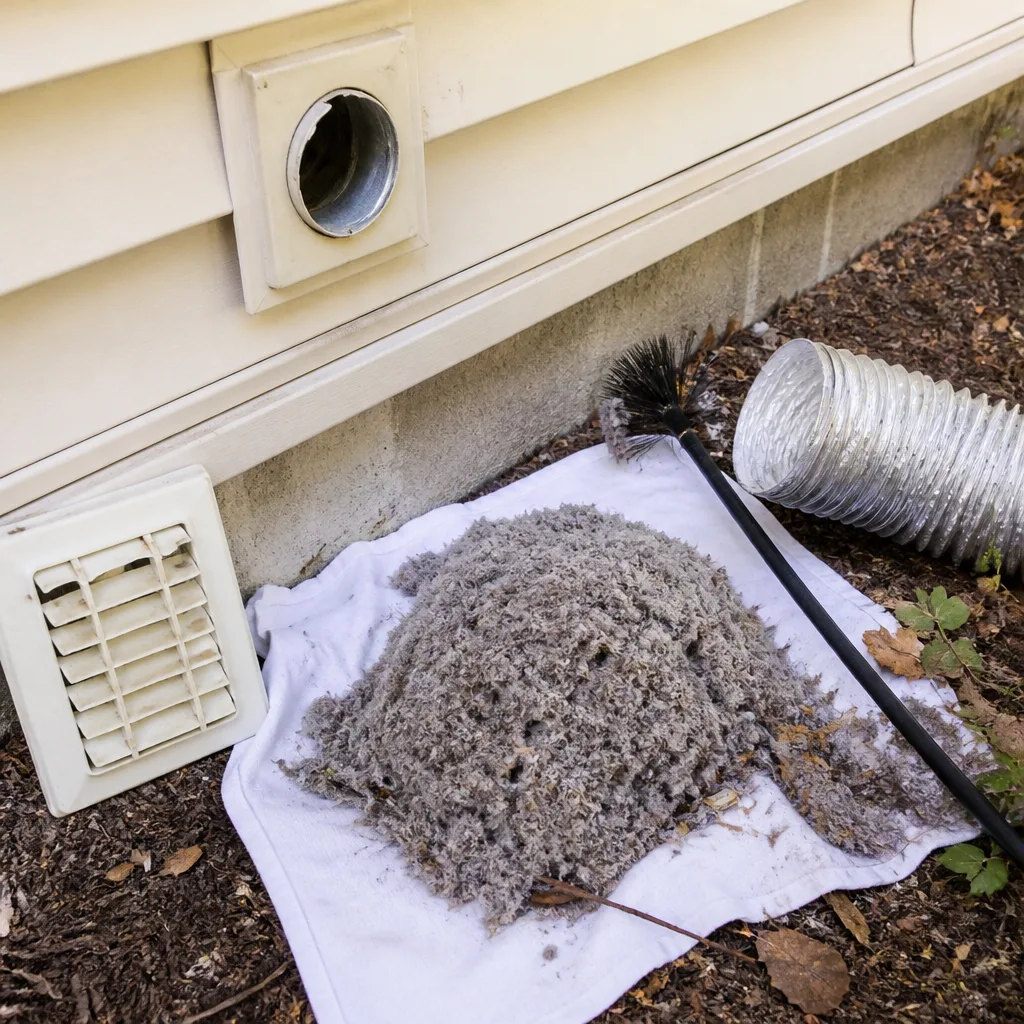 Dryer vent cleaning
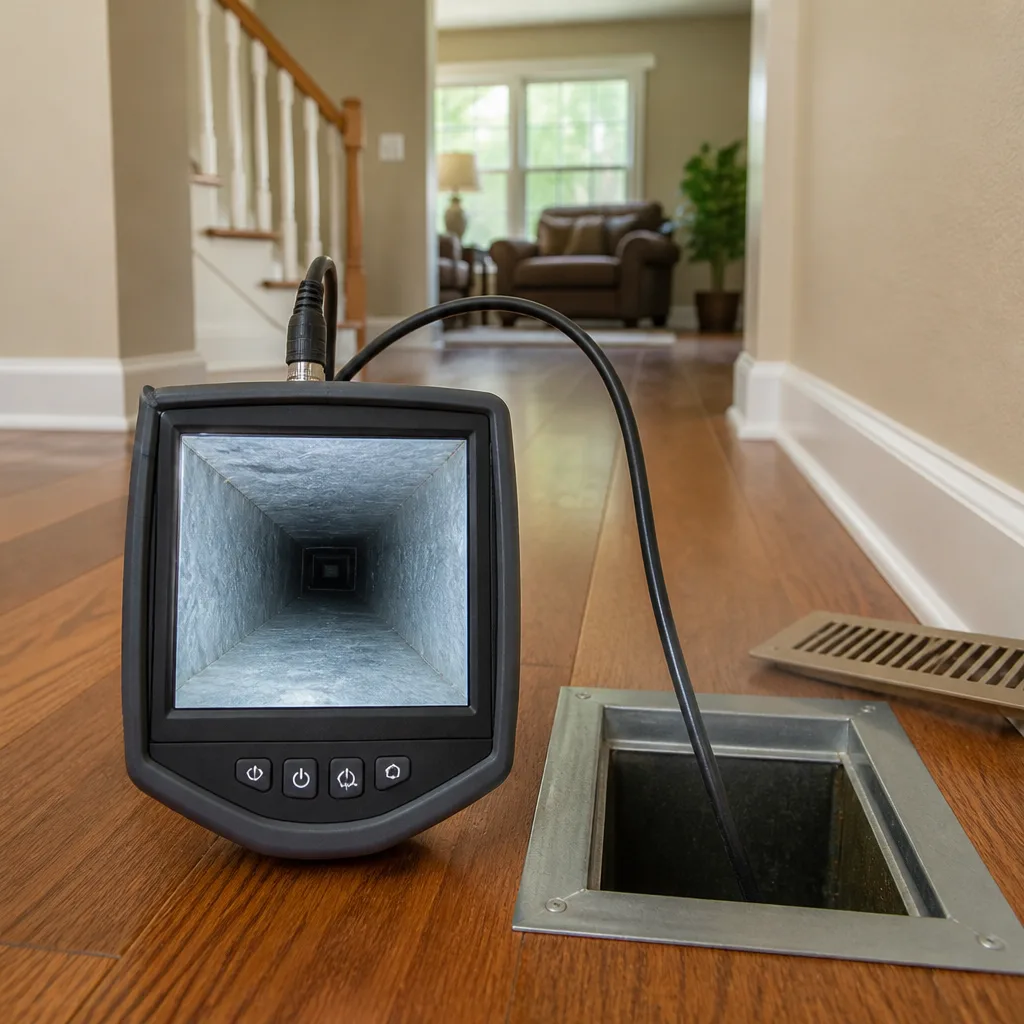 Camera inspection
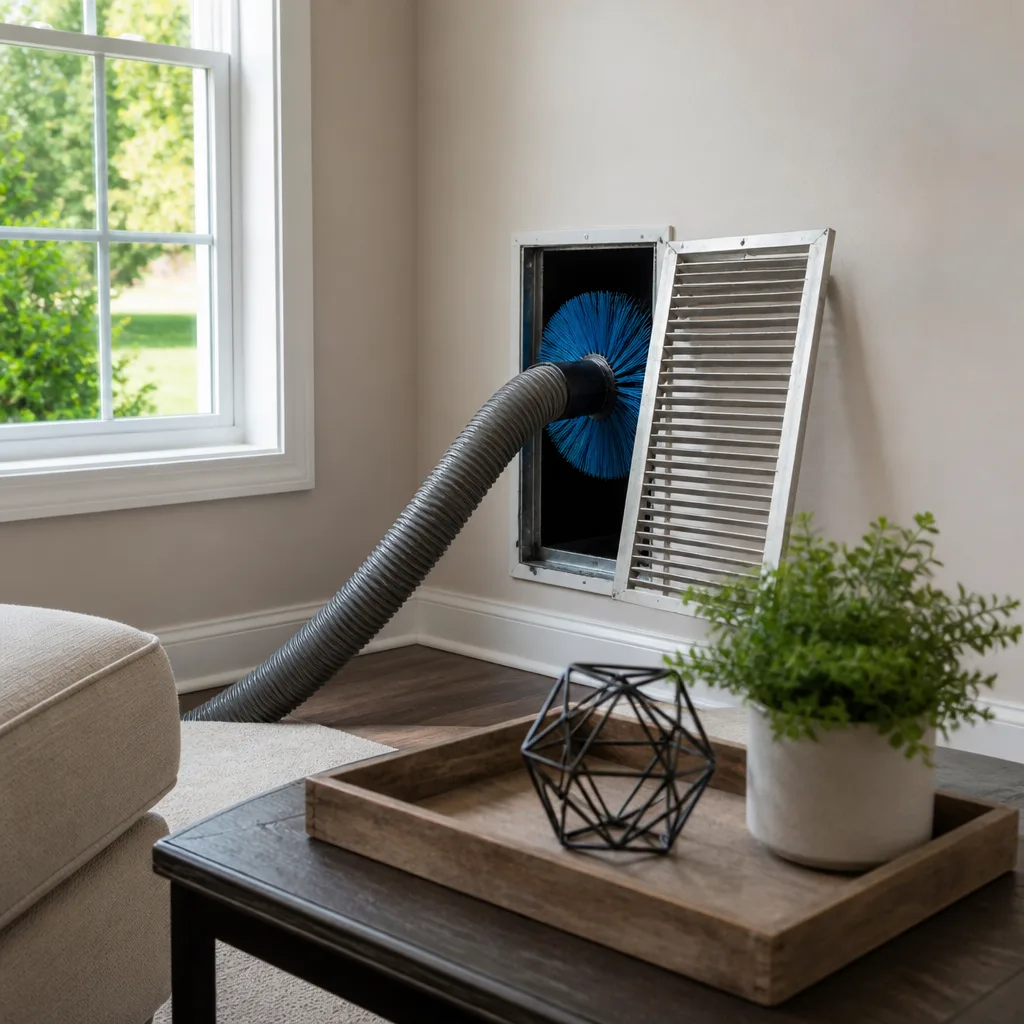 Sanitizing & deodorizing
Whole-system duct and dryer vent check with before-and-after photos - you see exactly what came out of your vents
That "$99 whole-house special" is a bait ad - the real number appears once they are in your hallway, or the "clean" is a shop-vac at the register. We photograph the inside of your ducts before and after instead.
Air Duct Cleaning Emergency Preparedness Guide for Borough Park Homes
Most emergency checklists for a Borough Park home end at the sump pump and the shop vac. Almost none of them mention the air handler. That’s the gap we want to close here. After a basement flood, a fire, an oil tank failure, or months of demolition dust from a neighboring lot, the ductwork in your building becomes the delivery system for whatever contaminated the air in the first place. Turn the system back on before it’s been cleaned and inspected, and you spread that contamination to every room on every floor. This guide walks through what to do with your HVAC before restoration crews arrive, how smoke and fuel odors behave inside duct liner, how to protect the system during nearby construction, and what documentation you’ll need for an insurance claim. If you’re searching for air duct cleaning after an emergency in Borough Park NY, start here.
Quick Answer
After any emergency that affects indoor air in a Borough Park home, keep the HVAC system off and have the ductwork and air handler inspected and cleaned before restarting it. Floodwater, smoke, fuel vapors, and construction dust all settle in ducts and on the air handler, and running the fan circulates that material through every room. A post-emergency inspection should cover the air handler, the return side, and the supply runs, and it should be documented in writing for your insurer.
Styles & brands we work with
- Whole-home duct cleaning
- Dryer vent cleaning
- Camera inspection
- Sanitizing & deodorizing
Table of Contents
- What to Do With Your HVAC After a Basement Flood
- Fire and Smoke Damage: Why Standard Cleaning Falls Short
- Construction Dust From Nearby Demolition
- Oil Tank Failure and Fuel Odors in Ductwork
- Documentation for Insurance Claims
- Building an Emergency Preparedness Plan Before Anything Happens
- The Restart Checklist: Bringing the System Back Online
- Common Mistakes to Avoid
What to Do With Your HVAC After a Basement Flood
The single most important instruction after water enters a Borough Park basement is this: do not run the HVAC system until the ductwork and air handler have been inspected. Floodwater carries silt, bacteria, and organic material. When it reaches a basement air handler or the lower sections of ductwork, that material dries into a fine film. The blower then lifts it and pushes it through every supply register in the house. Mold spores follow within days if humidity stays high.
Borough Park’s housing stock makes this a recurring problem rather than a rare one. Rowhouses and semi-detached homes here often have basement mechanical rooms, low return plenums, and duct runs that pass close to the floor. After a heavy rain event, water can wick into duct insulation before it’s visible on the concrete. Insulation that stays damp is where mold establishes first.
Here’s the order of operations we recommend while you wait for restoration crews:
- Shut the system off at the thermostat and, if you can reach it safely, at the service switch near the air handler. Don’t run the fan in “on” mode either.
- Photograph the water line on the air handler, the duct connections, and any insulation that got wet. Do this before anything is moved.
- Note the odor. A musty smell at the supply registers after a flood points to contamination already inside the system.
- Don’t tape over registers or stuff plastic into ducts. You’ll trap moisture and make the eventual cleaning harder.
- Call for an inspection before the system is restarted, even if the restoration company says the mechanicals look fine. Their scope is the building, not the duct interior.
An air handler that took on water needs more than a wipe-down. The blower wheel, the evaporator coil, and the cabinet interior all hold debris. This is why HVAC cleaning is a separate step from duct cleaning, and why we treat both in one visit when a flood has touched the mechanical room.
Fire and Smoke Damage: Why Standard Cleaning Falls Short
Smoke doesn’t just pass through ductwork. It deposits. Combustion particulate is sticky, and it bonds to the inside surfaces of galvanized duct and especially to the fibrous liner used inside many return plenums and air handlers. Once it’s embedded in liner, a standard vacuum-and-brush pass over the duct surfaces won’t get it out. The liner has to be treated or, in severe cases, replaced.
The return side is where smoke does the most damage. Returns pull air from multiple rooms back to the air handler, and during a fire the system can run for a while before power is cut. That means smoke gets pulled into the return trunk and pushed through the supply side. In a Borough Park semi-detached home, smoke can also travel through shared wall cavities and enter a neighboring unit’s return system, which is why two households sometimes report the same odor after a fire next door.
Remediation-grade work on a smoke-affected system usually includes:
- Containment and negative pressure so disturbed particulate doesn’t migrate into living space.
- HEPA-filtered vacuuming of the full duct run, not just the visible registers. We use Nikro HEPA equipment for this stage.
- Rotary brush agitation of the duct walls to break the bond between soot and metal, using Rotobrush systems.
- Chemical sponges and specialized cleaning on porous surfaces that can’t be brushed.
- Treatment of the air handler cabinet, blower, and coil.
- Odor control with a professional-grade product, not a store-shelf spray.
If the smoke smell returns within a week of cleaning, the source wasn’t fully removed. Call before you repaint or refurnish. A second pass is cheaper than replacing soft goods that absorbed the odor again.
Construction Dust From Nearby Demolition
Borough Park has been through years of infill construction and teardown work on its residential blocks. When a building comes down next door or across the alley, the dust that comes with it is finer than most people expect. Concrete and masonry dust includes particles small enough to stay airborne for hours. Your HVAC system, if it’s running, is the largest air mover on the property, and it will pull that dust into the return grilles and into the filter. What gets past the filter lands on the coil and the duct walls.
We’ve seen this most often on blocks with a fire-damaged building being demolished or a larger rowhouse coming down beside smaller homes. The dust doesn’t announce itself. Homeowners notice a fine gray film on windowsills and then, a month later, a filter that loads up in two weeks instead of three months.
The right response depends on timing:
- Before the work starts, close windows on the side facing the site and set the thermostat fan to “auto” so the blower only runs when heating or cooling calls for it.
- Upgrade the filter temporarily to the highest MERV your system can handle without straining the blower. Check your air handler’s documentation if you’re unsure.
- Seal obvious gaps at the air handler cabinet and at any return duct joints in the basement. A professional can do this properly as part of duct repair and sealing.
- After the demolition is done, have the system cleaned. Post-construction cleaning must include the air handler, the coil, all return trunks, and the supply runs, not just a vacuum at the registers.
The filter catches some of it. The rest stays in the system until it’s physically removed. If you’ve had construction nearby and your filters are clogging fast or your family is sneezing more, that’s the sign to schedule air duct cleaning.
Oil Tank Failure and Fuel Odors in Ductwork
Borough Park’s older homes include many that were originally heated with oil, and some still have tanks in the basement or buried outside. When a tank fails or a line leaks, the oil odor doesn’t stay in the mechanical room. Petroleum vapor travels through the same paths air takes: return ducts, gaps in the air handler cabinet, and any opening between the basement and the living space. Once those vapors reach the return system, the blower picks them up and distributes them.
Oil odor is one of the harder problems to solve because the molecules are persistent. Removing the visible oil isn’t enough. The vapor has to be reduced to a level that doesn’t recontaminate the living space, and the system has to be verified, not just cleaned and assumed fine.
What a proper response looks like:
- A VOC air quality test before any cleaning begins, so you have a baseline number for the claim file and for your own records.
- Isolation of the HVAC system so the blower doesn’t run during the oil remediation work.
- Cleaning of all surfaces the vapor contacted, including the air handler coil, cabinet, and duct walls.
- Sanitizing with professional treatment products. We use Guardsman-grade products for this work, not consumer sprays.
- A second VOC test after cleaning. A meaningful reduction between the two readings is what you’re looking for. Ask for both readings in writing.
If a remediation contractor tells you the ducts don’t need to be part of the oil spill scope, ask why. In our experience, the ductwork is usually the last place the odor hides and the first place it comes back from.
Documentation for Insurance Claims
Insurance claims for air quality remediation move faster when the documentation is structured. A written inspection report gives your adjuster something concrete to evaluate. Without one, you’re arguing about a smell. With one, you’re presenting a scoped problem with before-and-after evidence.
A post-emergency duct inspection report should contain the following. If a contractor can’t provide these items, that’s a signal about how they work.
- Scope of inspection: every component examined, including air handler, coil, blower, return plenums, supply trunks, and branch runs.
- Photographic record: before-and-after photos of each affected area. Photos of your own ducts, not stock images.
- Contamination findings: what was found, where, and how much. Described in plain terms, not vague language.
- Method statement: the equipment and process used, including HEPA vacuuming, rotary brush agitation, and any sanitizing treatment.
- Air quality readings: pre- and post-cleaning numbers where testing applies, such as VOC readings after an oil incident or particulate counts after a fire.
- Recommendations: any remaining repair or sealing work needed to prevent recurrence, such as sealing leaky return joints in a basement.
- Invoice with line items: each service on its own line so the adjuster can map it to the claim.
Ask for the report before the crew leaves or within a few days after. If your claim is disputed, having a complete document from the inspection stage is often the difference between an approved claim and a drawn-out back-and-forth.
Building an Emergency Preparedness Plan Before Anything Happens
Preparedness for ductwork emergencies is mostly about knowing your system before you need to. The homeowners we’ve worked with who handle an emergency well tend to be the ones who already knew where the air handler was, what kind of filter it takes, and who to call. Here’s how to get there.
- Map your system. Locate every return register, every supply register, and the air handler. Note which rooms share a return trunk. In a Borough Park rowhouse with multiple floors, this map is more useful than you’d think.
- Photograph the mechanical room. Take clear pictures of the air handler from multiple angles and store them on your phone. If there’s ever water damage, those photos show the pre-loss condition.
- Note the current filter size and MERV rating. Write it on the inside of the air handler door with a marker. That way you or anyone else can match it without guessing.
- Keep the ducts out of the “later” pile. If your ducts haven’t been serviced in years, schedule a baseline cleaning. Starting an emergency with a clean system means less material to remediate.
- Know your insurance policy’s language on air quality and duct remediation. Call your insurer and ask. Some policies cover it under water damage; some require a specific rider.
- Save a number you can call for an inspection. Even if you never use it, having it ready means you’re not searching online in a flooded basement.
One item that often gets left out of preparedness plans: dryer vent cleaning. A dryer vent clogged with lint is a fire risk in its own right, and after any fire in the building, the vent run should be checked along with the HVAC system. It’s a small line item that closes a safety gap.
The Restart Checklist: Bringing the System Back Online
Restarting a system after an emergency is not just flipping the breaker. If the ductwork and air handler haven’t been inspected and cleaned, restarting distributes whatever contamination is inside. This checklist applies whether the emergency was water, fire, dust, or fuel.
- Confirm the inspection is complete. You should have a written report with photographs and a stated method.
- Confirm the air handler and coil have been cleaned. The blower wheel should be visibly clean, and the coil fins should be free of debris.
- Confirm the ducts have been cleaned. Every return and supply run, not just the ones at the ends of the system.
- Confirm any duct damage has been repaired and sealed. Wet duct sections often separate at the seams. Cleaning without sealing leaves a path for future dust and moisture.
- Install a fresh filter. Match the MERV rating to your system’s capacity.
- Run the system and observe. Check for odor at each register, uneven airflow, or new noise. Note anything unusual and report it.
- Recheck at one week. A musty or smoky smell that returns within a week means the source wasn’t fully removed. Call before you do anything else.
If your building needs a full-scope job, it’s worth knowing that air duct cleaning includes the inspection, the cleaning, and the documentation in one appointment. When the job also involves repairs or sanitizing, we can usually fold those into the same visit so you’re not coordinating multiple crews.
Common Mistakes to Avoid
- Running the system “to dry things out.” After a flood, the fan spreads contamination instead of helping. Keep it off until the ducts and air handler have been inspected.
- Assuming the restoration company covers the ducts. Restoration crews handle the building envelope and contents. Duct interiors and the air handler are a separate scope, and most restoration contracts don’t include them.
- Trusting a quick vacuum to solve a smoke problem. Smoke embeds in duct liner. A surface pass leaves the source behind, and the odor returns within weeks.
- Skipping the post-construction cleaning after nearby demolition. Once the site is cleared, the dust stays in the system until it’s physically removed. A filter change doesn’t reach the duct walls.
- Accepting “the oil smell should fade.” Petroleum vapor in ductwork doesn’t fade on its own. Testing before and after cleaning is the way to know whether the work succeeded.
- Not asking for before-and-after photos. If a contractor can’t show you photos of your own ducts, you have no way to verify what was done.
- Taping over registers during construction instead of sealing the system properly. Shut the system off and use proper covers, but don’t tape over registers and trap dust against wet surfaces. Do it right the first time.
When to Call a Professional
Call for an inspection when any of the following applies: your basement has flooded and the air handler was in it; smoke has entered the building from a fire, whether in your unit or a neighbor’s; a neighbor’s building has been demolished and your filters are clogging faster than usual; an oil tank has failed or you’re smelling fuel; or it’s simply been years since the system was cleaned and you want a baseline. For most of these, running the system before an inspection is the worst thing you can do. Restoring a contaminated system without cleaning the ducts and air handler guarantees the contamination spreads to every room. Air Duct Cleaning Borough Park offers free estimates in Borough Park, and we can document what we find for your insurer. Call (855) 337-2070. We answer 24/7. Fast dispatch from 7am to 7pm, Sunday through Friday.
See the difference
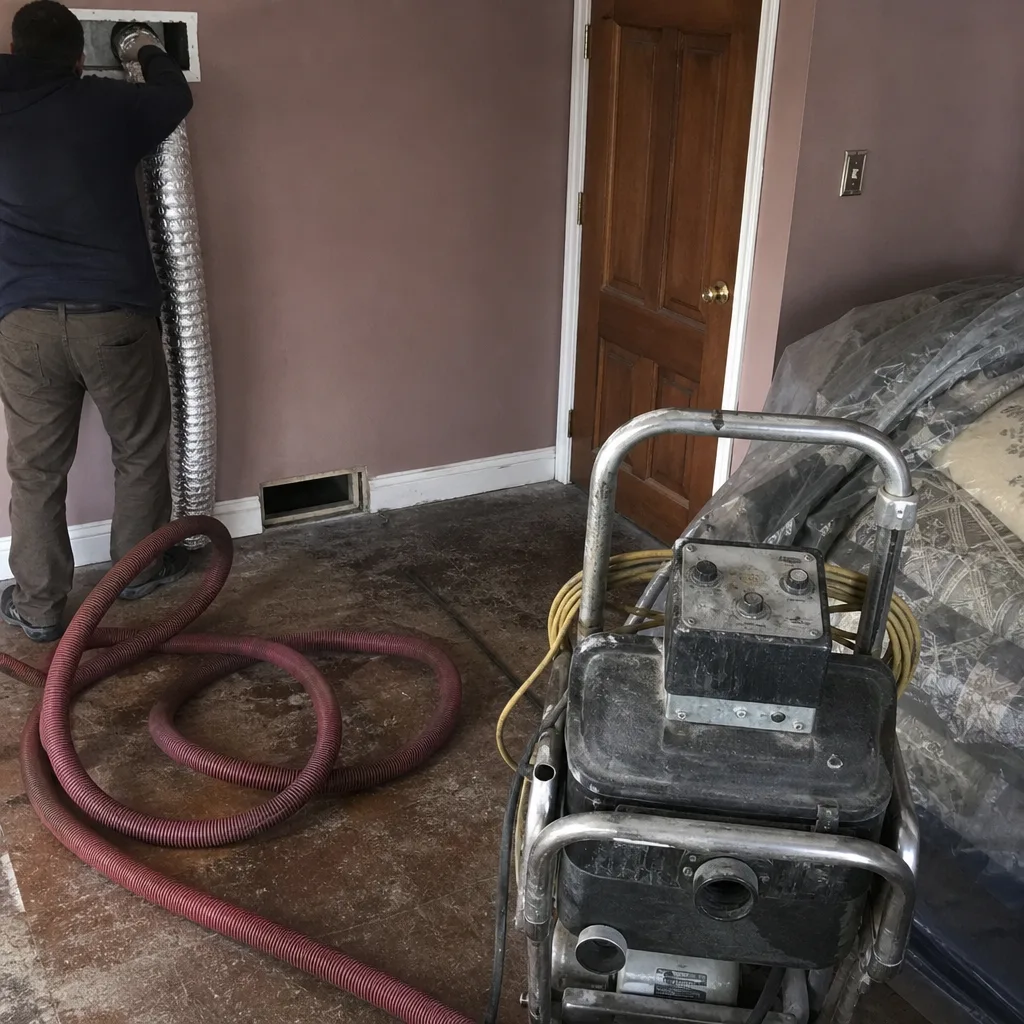 Before
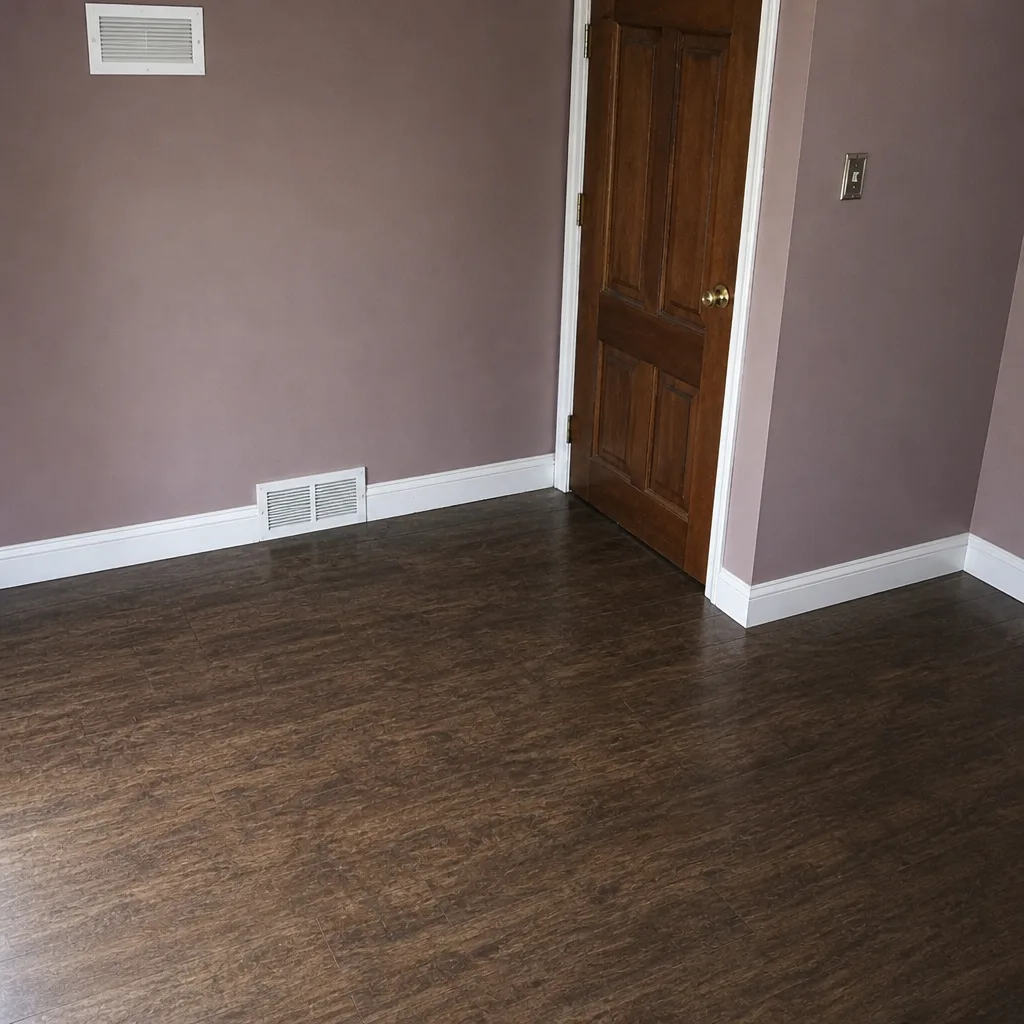 After
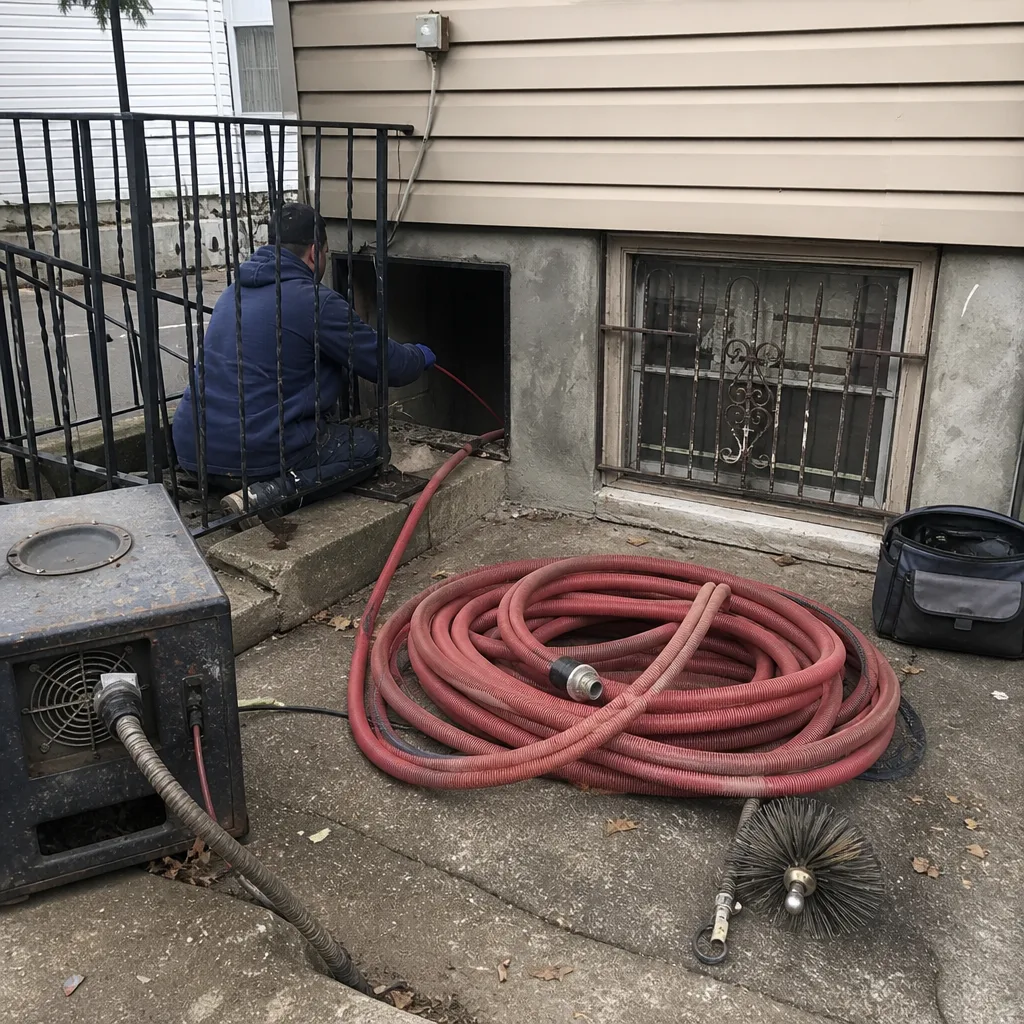 Before
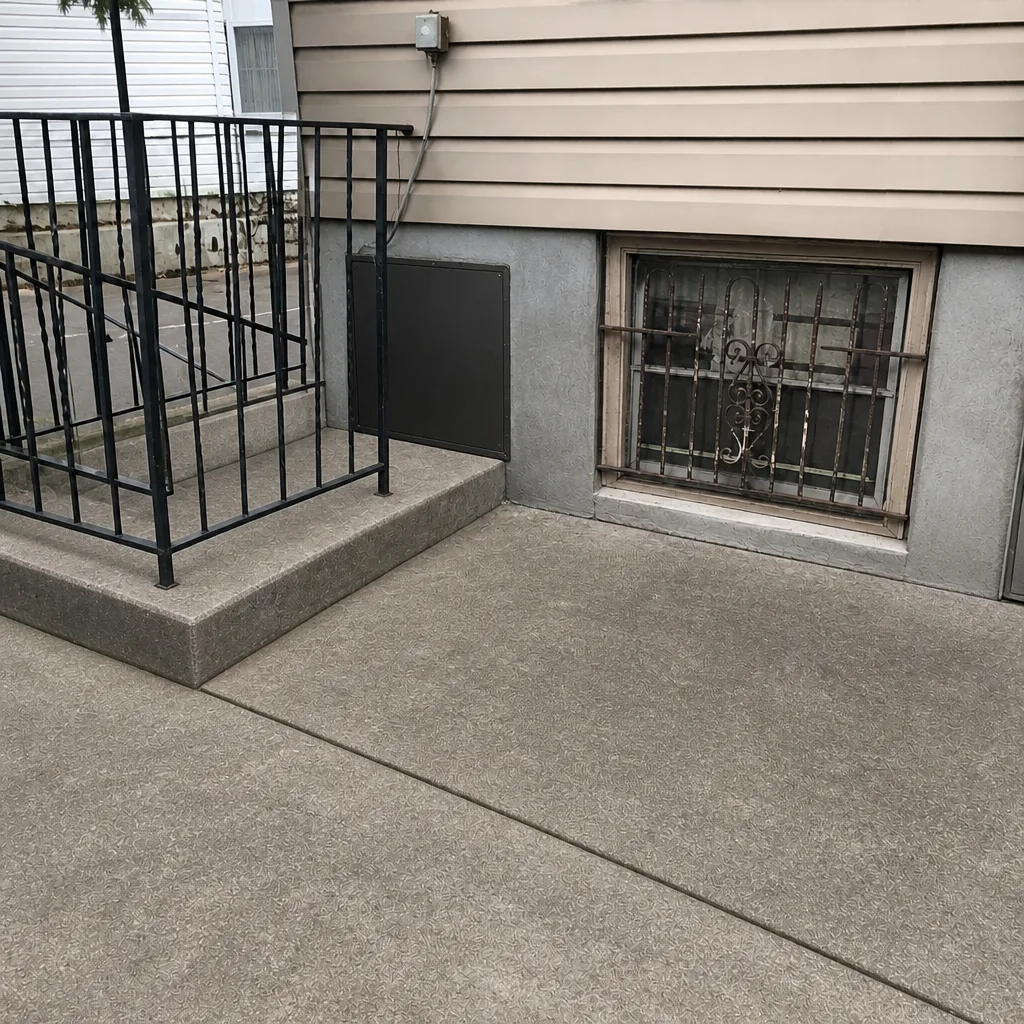 After
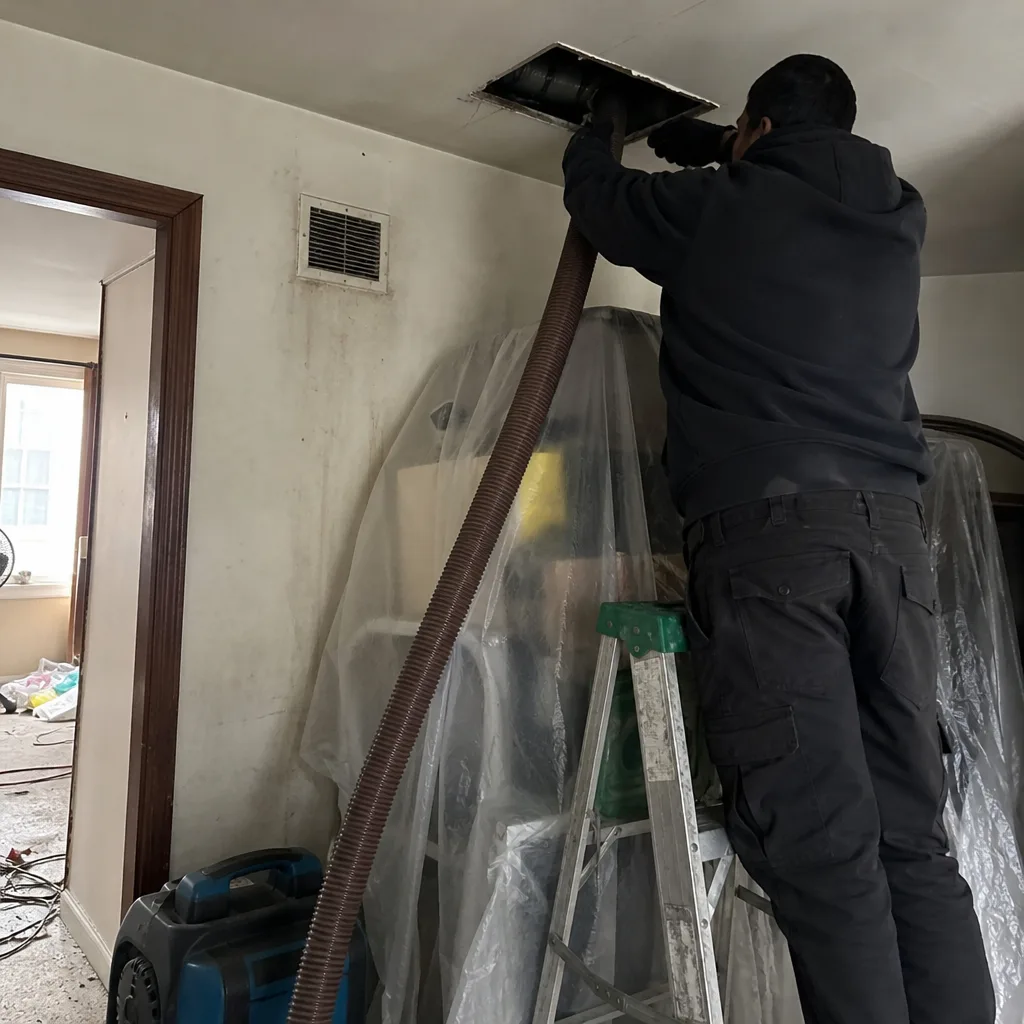 Before
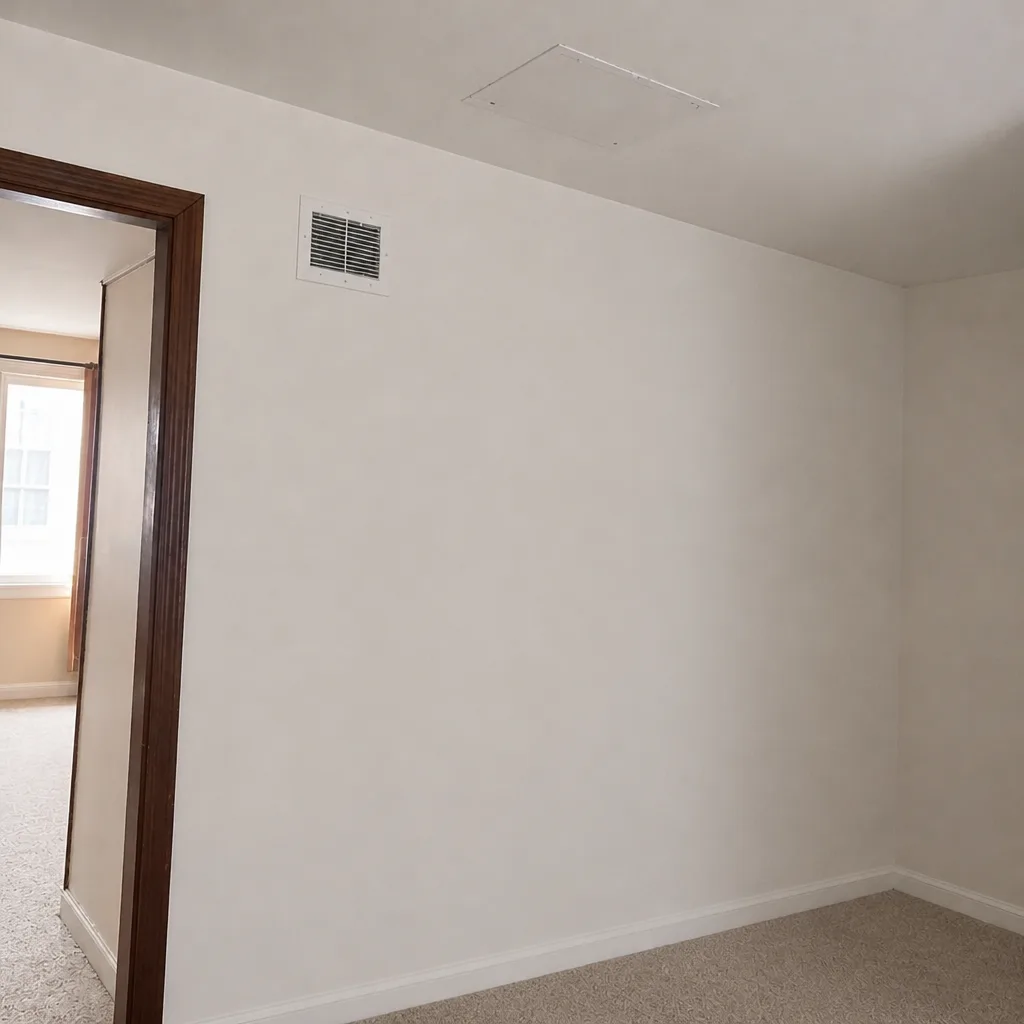 After
Frequently Asked Questions
As soon as the water is out and the building is safe to enter, and before the HVAC system is restarted. Mold can begin colonizing wet duct insulation within days, so the inspection should happen before the system runs again. Call (855) 337-2070 for an exact quote – estimates are free.
Often yes, under the property damage portion of a homeowner’s or landlord policy, but coverage depends on your specific policy language. A written inspection report with before-and-after photos and air quality readings is what makes a claim easier to approve. Ask your adjuster what documentation they need before the work starts.
The most likely reason is that smoke was embedded in duct liner or in the air handler cabinet and wasn’t fully removed. Standard cleaning removes surface soot but may not reach bonded particulate in porous material. Ask for a follow-up inspection that includes the return plenums and the air handler itself.
Yes, especially if your HVAC system was running during the work. The system is the largest air mover on the property, so it pulls in airborne dust through return grilles and open gaps. The dust that gets past the filter deposits on the coil and duct walls and stays there until it’s physically removed.
Ask for before-and-after photographs of your own ducts, a written report of the method used, and line-item invoicing. On jobs involving smoke or fuel contamination, ask for pre- and post-cleaning air quality readings. If the contractor can’t provide those, you can’t verify the work. Call (855) 337-2070 to schedule a documented inspection.
No, not for a genuine contamination event. Consumer vacuums and brushes can’t reach the full duct run, and they don’t have the HEPA filtration needed to contain disturbed particulate. Worse, agitating soot or mold with the wrong equipment spreads it into living space. A professional job uses equipment that captures what it loosens. Call (855) 337-2070 for an exact quote – estimates are free.
The Bottom Line
An emergency in a Borough Park home goes beyond the visible damage. The ductwork and air handler collect whatever was in the air during the incident, and they redistribute it every time the system runs. Clean and inspect before you restart. Test before and after when contamination involves smoke or fuel. Document everything in writing for your insurer. Keep a numbered checklist and a phone number ready before you need them. And if the system hasn’t been serviced in years, get a baseline cleaning now, while the system is dry and the building is intact. It’s a lot easier to prepare than to remediate.
Contact Us
If you’re in Borough Park and you’ve had a flood, fire, oil tank failure, or construction near your home, call us for a free estimate. We’ll inspect the system, document what we find, and tell you honestly what needs cleaning, repairing, or sealing. We use professional equipment and can work with your insurer. Call (855) 337-2070. We answer 24/7. Fast dispatch from 7am to 7pm, Sunday through Friday.
Written by the team at Air Duct Cleaning Borough Park.